
Blog
Caterpillar Cummins Detroit Block Repair: M52050 Professional Counterbore Sleeving Tool

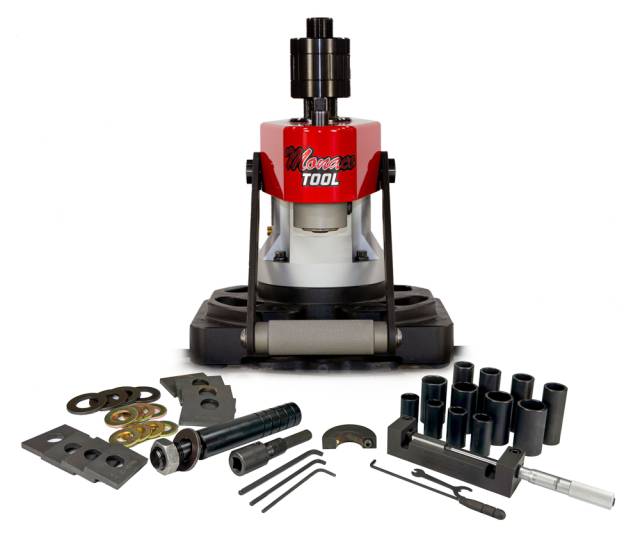
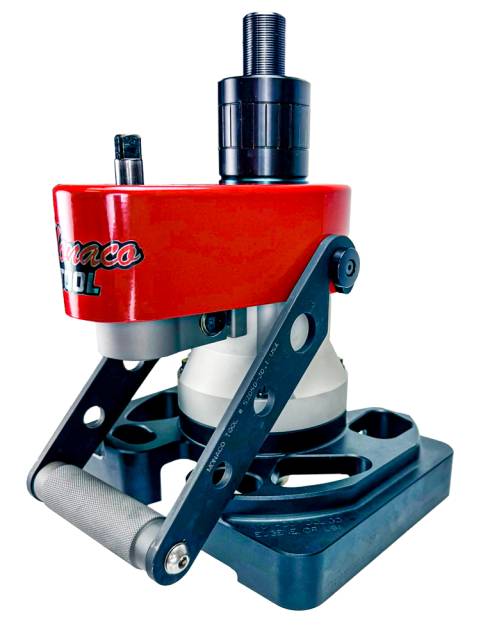
The M52050 Top Deck Counterbore Sleeving Tool machines damaged counterbores in heavy-duty diesel blocks for sleeve inserts. Equivalent to PT-2050/PT-2050-D, this USA-made tool with removable handle salvages blocks, ensuring precise liner seating for reliable performance.
The Critical Risks of Damaged Counterbores in Heavy-Duty Engines
Caterpillar, Cummins, and Detroit engines face extreme wear, where cracked or over-cut counterbores lead to liner failures, leaks, and breakdowns. Without proper sleeving, blocks become scrap, escalating costs.
- Liner misalignment – Causes blow-by, requiring $1,000–$2,500 gasket jobs
- Sealing failures – Leaks contaminate, costing $2,000–$4,000 cleanups
- Compression loss – Reduces power, leading to $1,500–$3,000 diagnostics
- Downtime losses – Scrap blocks add $5,000–$10,000 in new parts
- Block scrapping – Unrepairable damage totals $3,000–$6,000 per block
- Engine failure – Cascading issues demand overhauls ($8,000–$15,000)
What is the M52050 Counterbore Sleeving Tool?
The M52050 Top Deck Counterbore Sleeving Tool (PT-2050 / PT-2050-D Equivalent) is a heavy-duty boring tool for removing damaged counterbore ledges in diesel blocks. USA-made with removable handle, it prepares for sleeve inserts, salvaging blocks. Includes fixtures, micrometer, standard, handle, adapter (bits separate).
Ideal for machine shops, the M52050 reduces scrap rates by 80%, cuts repair time, and restores OEM specs for CAT, Cummins, Detroit engines.
Complete Tool Specifications & Compatibility
Compatible Engines: Caterpillar, Cummins, Detroit (heavy-duty diesel blocks)
Tool Functions: Counterbore boring for sleeve prep
Features: Removable handle for tight access
Included: Hold-down fixtures, micrometer block, set standard, driver handle, adapter (bits separate)
Replacement For: PT-2050, PT-2050-D
Application: Block salvage, deck repair, overhauls
Shipping Weight: 91.00 lbs (complete kit)
Professional Features & Block Repair Benefits
✓ Removable Handle
Easy access in tight bays, reducing setup time.
✓ Precision Boring
Cuts accurate ledges, preventing $1,000+ leaks.
✓ PT-2050 Equivalent
Matches OEM for compliance and quality.
✓ Block Salvage
Saves $3,000–$6,000 per scrapped block.
✓ Time Savings
50% faster than alternatives, cutting labor.
✓ Complete Kit
Fixtures/micrometer included for ready use.
Economic Impact: Counterbore Repair ROI
When Diesel Technicians Choose M52050
- Caterpillar counterbore boring
- Cummins block salvage
- Detroit deck repair
- PT-2050/PT-2050-D upgrades
- M50133/M50139 cutter use
- Heavy-duty machine shops
- Sleeve insert prep
Sleeve Blocks Precisely. Salvage Diesel Engines. Reduce Scrap.
Get M52050 – $9,700.00Why Professional Shops Trust M52050
Diesel rebuilders trust the M52050 for its PT-2050 equivalence, removable handle, and ability to salvage 80% more blocks, avoiding $7,500–$15,500 in scrap per failure. It offers precise boring, faster repairs, and durability shops demand.
From CAT to Detroit overhauls, this tool keeps engines running.
overall rating:
my rating:
log in to rate