
Blog
Professional Diesel Compression Testing: Complete Workflow Using ATC4451 Gauge
Diesel Compression Testing Procedure | Complete Workflow Guide
.png)
Professional Diesel Compression Testing: Complete Workflow Using ATC4451 Gauge
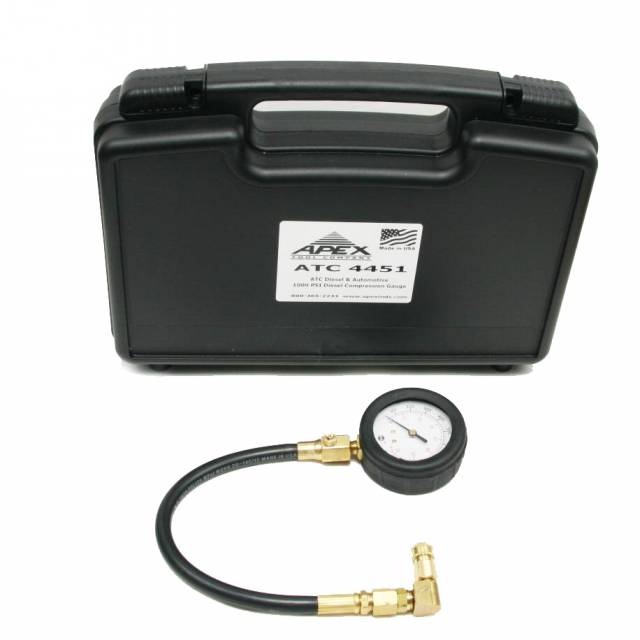
Diesel compression testing is a critical diagnostic procedure that reveals the health of pistons, rings, valves, and head gaskets. This complete workflow guide covers the ATC4451 Diesel Compression Gauge (0-1000 PSI) for professional heavy-duty engine service. From engine preparation through interpretation of compression readings, follow these steps for accurate diagnosis every time—identifying root causes quickly and directing repairs with precision. Save labor hours and build customer confidence with professional-grade compression testing.
GET COMPRESSION GAUGE NOW
Complete Workflow Coverage • Professional Grade
Phase 1: Engine Preparation & Safety
- Warm engine to operating temperature – Run for 5-10 minutes to stabilize conditions.
- Turn engine OFF – Allow to cool slightly; perform all work with engine off.
- Disconnect fuel injector harness – Prevent fuel injection during cranking.
- Remove fuel rail or injector holders – Gain access to injector ports (varies by engine).
- Unscrew all injectors – Remove from cylinder head; store safely on clean surface.
- Clean injector ports – Remove debris or corrosion from around port openings.
Phase 2: ATC4451 Setup & Attachment
- Inspect ATC4451 before use – Check hose for leaks, coupler for damage.
- Reset gauge to zero – Use instant-release valve to ensure clean starting point.
- Select correct coupler size – Verify coupler matches injector port thread size.
- Attach coupler to first cylinder port – Ensure tight, leak-free connection.
- Verify coupler is secure – Pull gently to confirm no movement.
- Position gauge where visible – Ensure mechanic can read dial during test.
Phase 3: Compression Testing Procedure
- Close throttle and deactivate fuel system – Prevent any fuel injection.
- Engage starter motor – Crank engine 4-6 revolutions (10-15 seconds).
- Watch gauge carefully during cranking – Observe maximum pressure reached.
- Record maximum reading – Note PSI value when pressure peaks.
- Release starter and stop cranking – Do not over-crank (risk of battery drain).
- Use instant-release valve to reset gauge – Prepare for next cylinder test.
- Repeat for remaining cylinders – Test all cylinders in order.
Accurate Testing = Correct Diagnosis
ORDER ATC4451 NOW →Phase 4: Compression Reading Interpretation
Compression Values & Diagnosis:
Normal Compression Range:
- 400-600 PSI – Most heavy-duty diesel engines (typical)
- Variation between cylinders: Should not exceed 50 PSI difference
Low Compression on All Cylinders:
- Timing issues (valve timing off)
- Bent push rods affecting all cylinders
- Valve overlap problems
- Head gasket failure (coolant in compression)
Low Compression on Specific Cylinders:
- Worn piston rings
- Cracked or damaged pistons
- Leaking intake or exhaust valves
- Cylinder liner damage
High Compression Variation:
- Uneven ring wear across cylinders
- Selective valve issues
- Carbon buildup affecting specific cylinders
Slow Pressure Loss (After Initial Reading):
- Leaking intake valves
- Leaking exhaust valves
- Ring blowby (confirms worn rings)
Phase 5: Wet Compression Test (Optional Advanced Diagnosis)
- If dry compression is low, perform wet test – Helps distinguish ring vs. valve issues.
- Inject small amount of light oil into cylinder – Use oil can or syringe (1-2 teaspoons).
- Crank engine again with ATC4451 attached – Record new compression reading.
- Compare wet vs. dry readings – See guidelines below.
- Interpret results:
• If wet compression significantly higher: Worn piston rings (oil seals them temporarily)
• If wet compression unchanged: Valve problem, not rings
Professional Compression Testing = Confident Diagnosis
ADD TO CART • ATC4451Common Testing Mistakes to Avoid
- ❌ NEVER test cold engine – Temperature affects readings; warm first
- ❌ NEVER leave fuel system active – Fuel injection interferes with test
- ❌ NEVER over-crank engine – Risk battery drain and starter damage
- ❌ NEVER use loose coupler connections – Air leaks = false low readings
- ❌ NEVER skip injector removal – Closed injectors prevent accurate test
- ❌ NEVER compare readings across different engines – Use OEM specs only
- ❌ NEVER skip cylinder labeling – Record which cylinder is which
- ❌ NEVER guess at OEM specifications – Always reference manual values
Professional Diagnosis = Business Success
The Compression Gauge Every Diesel Shop Needs
BUY NOW → $100
✅ 0-1000 PSI Range • Professional Grade
✅ Instant-Release Valve • Universal Coupler
✅ Heavy-Duty Hose • Accurate Diagnosis
✅ Instant-Release Valve • Universal Coupler
✅ Heavy-Duty Hose • Accurate Diagnosis
overall rating:
my rating:
log in to rate