
Blog
Tech Guide: Commercial Diesel Cylinder Compression Testing Steps
Precision diagnostic guidelines for commercial fleet and heavy diesel service technicians.
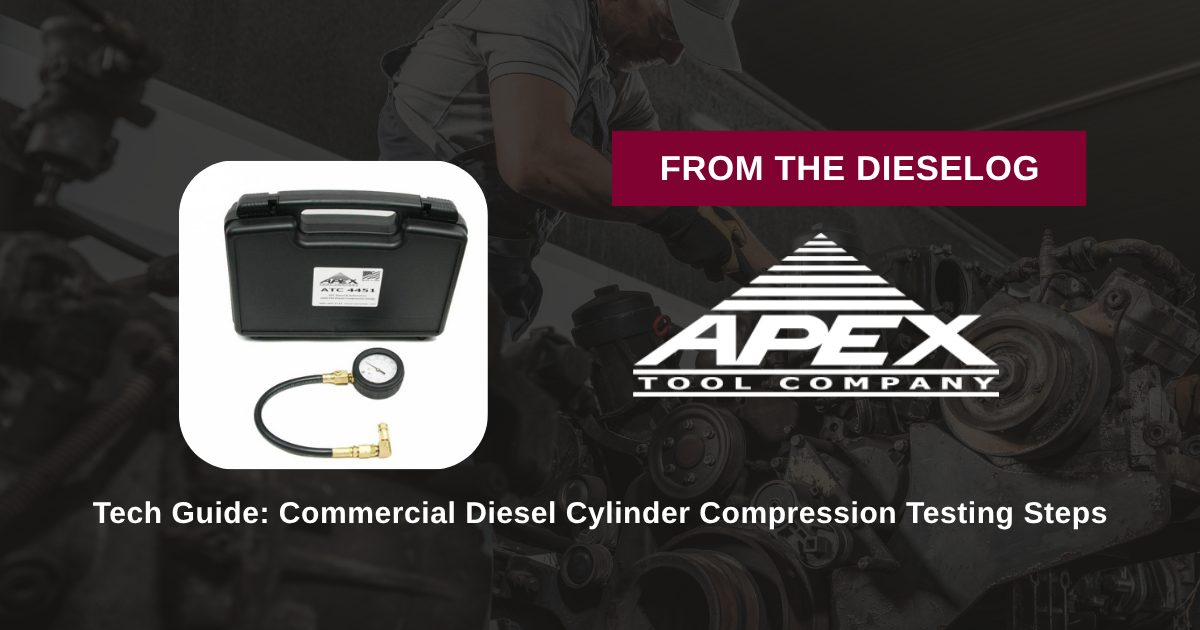
Performing a compression diagnostic test to locate low cylinder pressure on a commercial diesel truck, agricultural tractor, or stationary power generator? Follow this step-by-step professional workshop procedure to disable fuel injection, connect adapter fittings, set up the ATC 4451 gauge, record peak pressure readings, and use the instant release valve for multi-cylinder evaluation.
Why Uncalibrated Gauges & Low-Pressure Hoses Cause Diagnostic Hazards
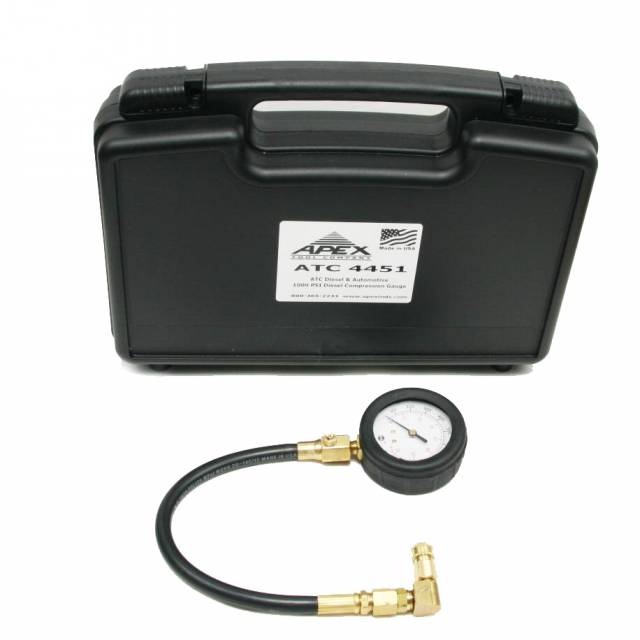
On commercial diesel engines, individual cylinder compression readings must be compared across all cylinders to evaluate internal engine mechanical condition. A healthy engine maintains tight pressure uniformity—typically within 10% across all cylinders. When technicians use low-grade automotive compression gauges rated below 500 PSI or fitted with unreinforced rubber hoses, serious problems occur. Compression spikes during diesel engine cranking can rupture weak diagnostic hoses, showering mechanics with hot oil mist and debris. Furthermore, flexible hoses that swell under high pressure act as expansion chambers, absorbing compression volume and giving false low readings that lead to unnecessary, expensive engine teardowns. Utilizing the professional-grade ATC 4451 Compression Gauge eliminates these diagnostic failures. Constructed with a 1,000 PSI rated movement and a reinforced USA hydraulic hose, the ATC 4451 transfers 100% of cylinder pressure straight to the gauge face without hose swelling. The clear dual-scale dial gives instant visual confirmation of peak cranking pressure, allowing technicians to verify ring seal, valve seating, and head gasket integrity accurately.
The 5-Step Commercial Diesel Compression Testing Protocol
- Disable Fuel Delivery & Prepare Engine: Bring the engine up to operating temperature if possible. Disable fuel injection (unplug fuel solenoid or ECM injector harness) to prevent fuel delivery during cranking. *Verify the starter battery bank is fully charged to ensure consistent cranking RPM across all cylinder tests.*
- Remove Glow Plug or Fuel Injector: Remove the glow plug or dummy injector from the target test cylinder. Clean the port seating area to remove carbon deposits and rust scale that could prevent adapter sealing.
- Connect Adapter & Thread ATC 4451 Hose Assembly: Thread the appropriate diesel glow plug or injector adapter into the cylinder port. Snap the ATC 4451 quick-coupler hose securely onto the adapter fitting. *Ensure the side release valve is closed.*
- Crank Engine & Record Peak PSI Reading: Crank the engine for 4 to 6 compression strokes (approx. 5–8 seconds) until the gauge needle reaches its maximum peak reading. Note the final PSI / kPa measurement on the ATC 4451 dial.
- Depress Release Valve & Repeat on Remaining Cylinders: Press the built-in instant release valve on the side of the ATC 4451 to vent trapped pressure and reset the needle to zero. Disconnect the coupler, move to the next cylinder, and repeat the test sequence to compare pressure uniformity across the entire engine block.
PRO-TECH FUEL DISABLE & CONSISTENT CRANKING SPEED MANDATE:
ALWAYS DISABLE FUEL INJECTION completely before cranking during compression tests! Liquid fuel wash inside unignited cylinders distorts ring seals and causes false pressure spikes! ALWAYS MAINTAIN FULL BATTERY CHARGE; slow cranking RPM lowers compression readings artificially!
1.00 lb Precision High-Pressure USA Hose Diagnostic Assembly. Protect Fleet Overhauls.
Get the ATC 4451 Compression Gauge Now
overall rating:
my rating:
log in to rate