
Blog
Mack E6 E7 E9 Roller Lifter Holding Procedure: ATC37720 Professional Step-by-Step Guide
Detailed step-by-step guide for Mack E6 E7 E9 tappet holding using ATC37720 kit.
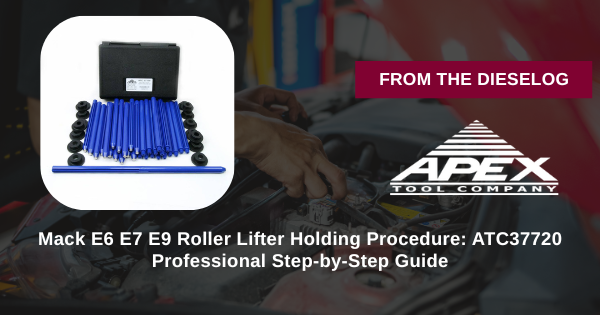
This 10-phase procedure uses the ATC37720 kit to safely hold roller lifters/tappets on Mack E6, E7, and E9 engines during camshaft removal. Optimized for RD Cabs, it prevents damage and ensures OEM compliance—essential for professional Mack service.
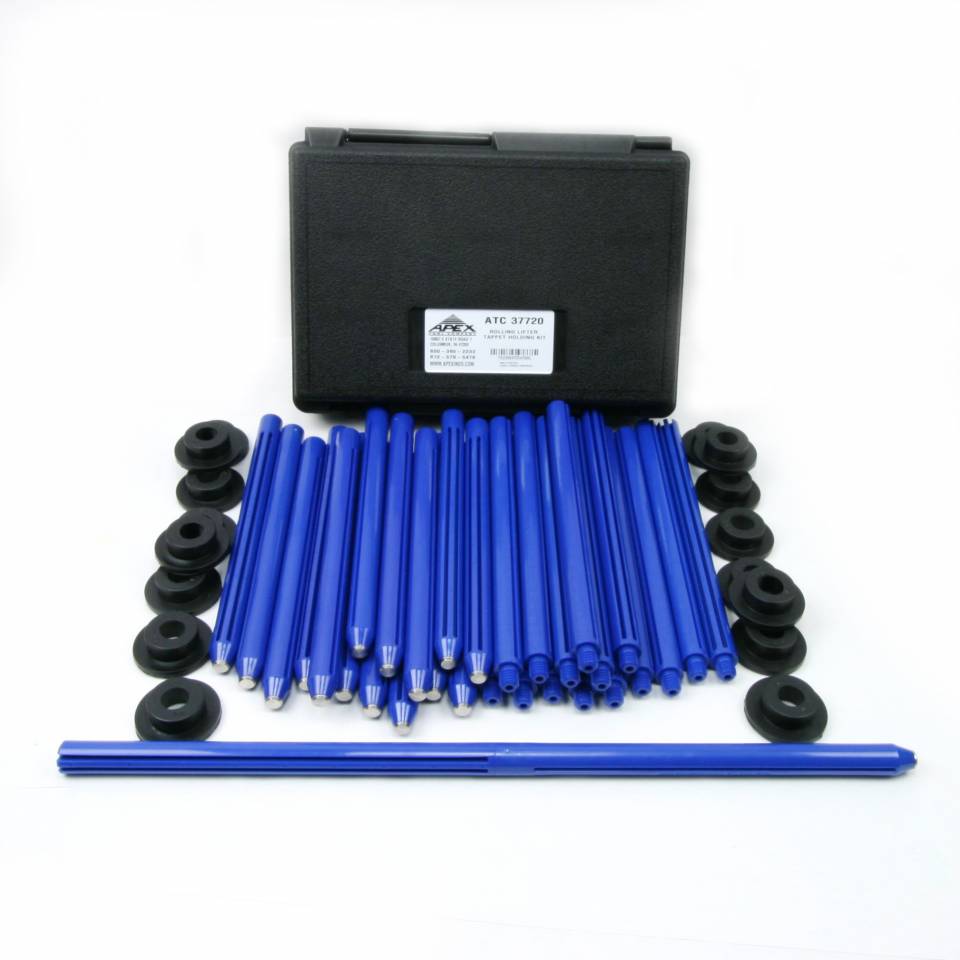
Introduction: Essential Lifter Holding for Camshaft Service
In Mack E6, E7, and E9 engines, roller lifters must be held clear of cam lobes during removal to prevent damage or misalignment. The ATC37720 kit, equivalent to J-37720-C, uses modular rods and grommets for secure holding, especially in confined RD Cab spaces—transforming a risky task into a controlled, efficient process.
Phase 1-3: Engine Preparation & Access
- Consult service manual and park engine securely – Verify torque specs; chock wheels if vehicle-mounted
- Remove valve covers and rocker arms – Label components; drain oil if needed to avoid spills
- Expose pushrod openings – Clean area; inspect lifters for wear or preload issues
- Assemble two-part rods by screwing together – Ensure tight connection for stability
- Gather kit: rods, grommets, and safety gear – Confirm all parts are intact
Phase 4-6: Initial Lifter Contact & Lift
- Lower assembled rod into first pushrod opening – Guide slowly to contact roller lifter/tappet base
- Apply gentle upward pressure – Feel for contact; avoid excessive force
- Lift rod slightly to clear cam lobe – Rotate engine if needed for lobe positioning (TDC preferred)
- Verify tappet elevation – Lifter should be 0.020–0.050″ above lobe without binding
- Prepare grommet for holding – Slide to ready position on rod shaft
- Check for lobe clearance visually – Ensure no contact on adjacent lobes
Phase 7-9: Secure Holding & Multi-Cylinder Repeat
CRITICAL: ATC37720 Secure Holding Setup
- Slide grommet down rod to lock tappet – Position to hold elevation firmly without slippage
- Test hold by gentle shake – Confirm stability before proceeding
- Repeat process on remaining cylinders – Work sequentially; rotate engine as needed
- Monitor for uniform clearance – All lifters should clear lobes evenly
- Inspect rods for stress – No bending; re-tighten joints if loose
- Document each cylinder hold – Note for reassembly reference
Phase 10: Camshaft Removal & Post-Hold Inspection
- With all tappets held, loosen camshaft retainers – Follow manual torque sequence in reverse
- Slide camshaft forward and remove – Support to avoid lobe nicks; inspect for wear
- Verify all holds remain secure – No drops during extraction
- Clean cam bore and inspect lifters – Remove any debris; measure preload if required
- Prepare for reinstallation – Lube lobes; reverse procedure carefully
- Final engine rotation check – Confirm no binding post-service
Critical Safety Warnings: Lifter Holding Procedure
MUST AVOID THESE FATAL ERRORS:
- ❌ Never skip manual consultation – Outdated steps risk engine damage ($2,000+)
- ❌ Never force rod insertion – Bends components, causes misalignment
- ❌ Never under-lift tappets – Lobe contact scores cam ($1,500–$4,000)
- ❌ Never omit grommet lock – Drops lead to contamination ($5,000+)
- ❌ Never work without labeling – Reassembly errors bend valves
- ❌ Never ignore joint tightness – Loose rods fail in tight spaces
- ❌ Never skip post-inspection – Hidden issues emerge on startup
- ❌ Never proceed without PPE – Gloves/eye protection for oil/debris
Professional Service Documentation
Why ATC37720 Eliminates Risky Cam Service
Traditional Risky Methods:
- ❌ Manual holding → Drops ($1,500–$4,000 cam damage)
- ❌ Single-part tools → RD Cab inaccessibility
- ❌ No grommets → Unstable holds, misalignment
- ❌ 2–4 hour delays → $300+/hour downtime
- ❌ Non-OEM → Warranty voids
ATC37720 Professional Advantages:
- ✅ Two-part rods for tight spaces
- ✅ Grommet-locked security
- ✅ J-37720-C exact equivalent
- ✅ 60% faster multi-cylinder holds
- ✅ Zero drops or contamination
- ✅ OEM-compliant precision
- ✅ Protects against $8,800–$20,700 losses
- ✅ Repeatable for 1,000+ services
Hold Professionally. Safeguard Mack Engines. Streamline Overhauls.
Get ATC37720 – $580.00
overall rating:
my rating:
log in to rate