
Blog
Why the ATC 9990166 is Critical for Volvo D13 / Mack MP8 Rear Seal Service
Why the right rear seal installer is the cheapest insurance policy in a heavy-duty shop
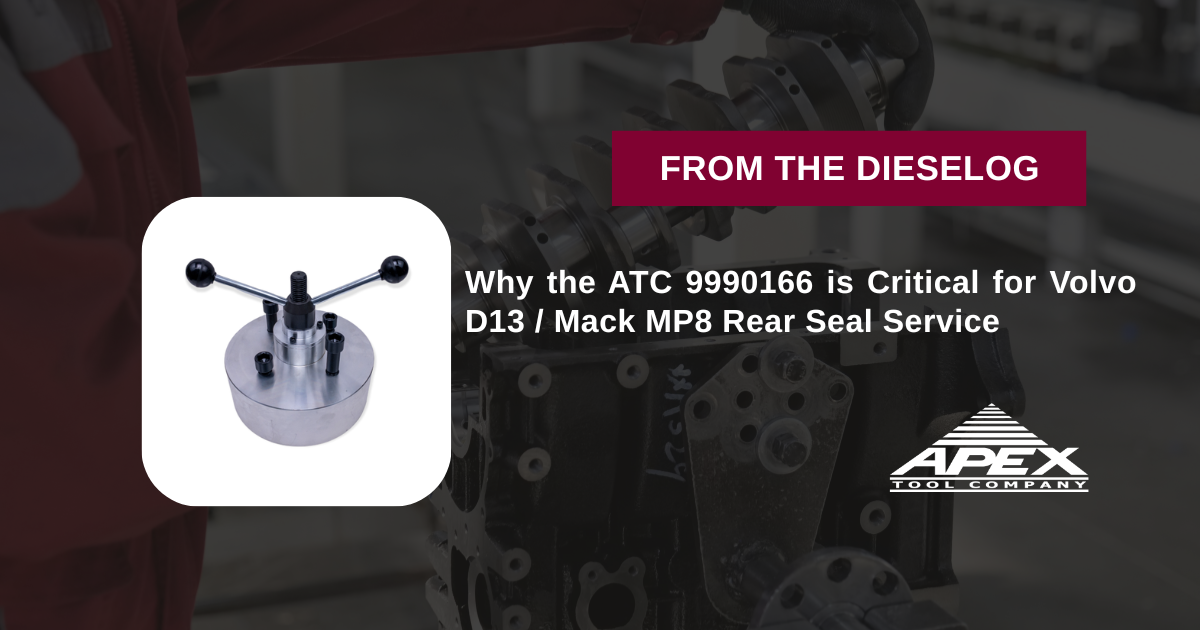
A rear crankshaft seal that leaks within 5,000 miles of installation is almost never a "bad seal" — it's a seating failure. And seating failures trace back to one decision: which installer ended up in the technician's hand.
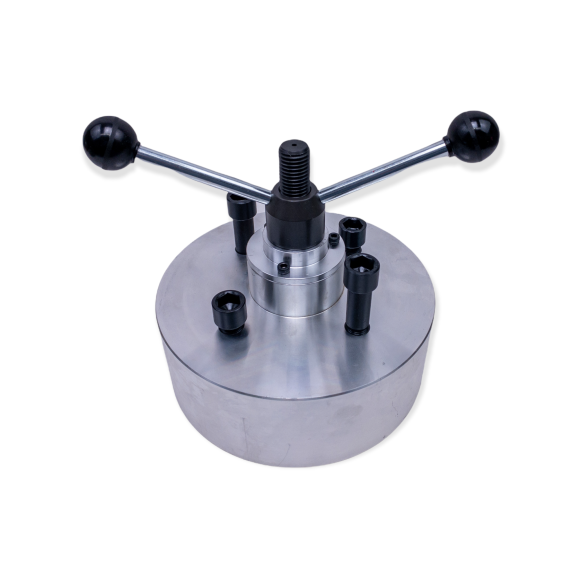
The Real Cost of a Botched Rear Seal Install
Rear crankshaft oil seal failure on a Volvo D13 or Mack MP8 is not a "drip in the driveway" problem. The seal sits between the crankshaft flange and the flywheel housing, which means a leak ends up on the clutch friction surface, in the bell housing, and across the flexplate. Once oil contaminates the clutch, the only fix is a full driveline-out repair — transmission down, flywheel resurfaced or replaced, clutch kit, and a second rear seal job. A $375 tool decision becomes a $6,000 to $9,000 labor and parts ticket, and that's before you count the days the truck sits out of service.
5 Reasons Shops Standardize on the ATC 9990166
- Concentric Seating Without Crank Damage: The installer's machined pilot rides the crankshaft snout, holding the seal perfectly perpendicular to the bore as it travels home. No cocking, no lip rollover, no scoring on the crank sealing surface.
- OEM-Equivalent to Volvo 8880013: Direct functional replacement for the factory Volvo 8880013 / 9990166 installer specified in service manuals for FM12, D12, D13, and D16 platforms. Same depth, same press surface geometry, same outcome.
- Compatible With Volvo Seals 22191895 & 1543896: Designed around the exact seal OD, ID, and flange geometry used on the late-model Volvo and Mack heavy-duty platforms — no "close enough" sizing.
- Built For Field & Shop Conditions: Fabricated from durable tool-grade material that doesn't deform, mushroom, or wander after repeated pressings — even on dusty fleet floors and in mobile-service trucks.
- Saves Two Technician Hours On Every Job: When the seal goes in square the first time, you don't pull it back out, you don't re-prep the bore, you don't second-guess the install. One pass, sealed, done.
Why the Wrong Tool Costs You the Crankshaft
Most shop owners who've never seen a rear crank failure first-hand underestimate what a bad seal install actually does. The rear main seal on a Volvo D13 or Mack MP8 isn't pressed onto the crank — it's pressed into the block (or the rear seal carrier on some variants) and rides on a polished sealing surface on the crank flange. If the seal is cocked even half a millimeter during install, the lip wears unevenly. Within a few hundred operating hours, that uneven wear cuts a groove into the crankshaft itself. At that point the seal isn't the failure — the crankshaft is. And on a D13, that's a six-figure cascade of downtime before the truck rolls again. The ATC 9990166 exists specifically to make that mistake impossible.
The Five Failure Modes a Wrong Installer Causes
When shops use a generic seal driver, a brass bar, or — worst of all — a hammer-and-socket combo, the failure modes are predictable. Understanding them is half the case for buying the right tool.
1. Lip Rollover. The garter spring inside a modern PTFE-faced rear seal is fragile. A driver that contacts the inner lip first folds the spring inward. The seal looks perfect on the bench, leaks within a week in service.
2. Cocked Installation. Without a pilot riding the crankshaft, the seal enters the bore at an angle. One side seats deep, the other side stays proud. Oil pressure finds the high side every time.
3. Over-Driven Depth. Hammered installs almost always go too deep. The seal ends up below the bore chamfer and the dust lip loses contact with the crank flange, pulling debris into the sealing surface.
4. Crank Surface Scoring. Improvised drivers contact the crank during the press. Even one fine scratch on the sealing surface — at the wrong angle — becomes a permanent leak path no seal can compensate for.
5. Carrier Distortion. On D13 and MP8 rear seal carriers, uneven press force warps the carrier face. The bore goes oval. The next seal you install leaks even faster than the first.
Real-World Case: One Fleet, Three Comebacks, $11,400
A 22-truck regional fleet running Volvo D13s through their in-house shop had three rear seal comebacks in a single quarter. Each truck came back within 3,000 miles of the rebuild for the exact same complaint: oil in the bell housing. The fleet's lead technician — a 19-year veteran — was convinced the seals were defective. The parts supplier confirmed the seals tested fine on the bench. The actual root cause? The shop had retired its dedicated Volvo seal installer two years earlier and started using a universal seal driver kit. Two of the three jobs were cocked installs. The third was over-driven by 2 mm. Total cost to the fleet for those three comebacks: $11,400 in parts, labor, and tow charges. They bought the ATC 9990166 the next week. Zero rear seal comebacks since.
When the Rear Seal Should Be Replaced
Rear crankshaft oil seal replacement on Volvo and Mack heavy-duty platforms isn't a calendar-mileage service — it's an opportunity service. The right time to replace it is whenever the driveline is already separated from the engine. That includes clutch replacement, flywheel resurfacing, flexplate service on automated manual transmissions, engine reseal jobs, and full inframe or outframe rebuilds. Skipping the rear seal during a clutch job to "save the customer some money" is the single most common false economy in heavy-duty repair. If the seal leaks 40,000 miles after that clutch job, you're pulling the transmission again — and you're eating the labor because the customer just paid you to do this work.
The ATC 9990166 lives in the same drawer as your clutch alignment tool for exactly this reason. Anytime the trans comes out, the rear seal goes in. Every time. No exceptions.
Fleet-Level ROI: What This Tool Pays Back In One Year
Let's do the math the way a fleet manager would. Average labor rate on a heavy-duty rear seal comeback (trans out, clutch inspect, reseal, retest): 14 to 18 hours at $145/hour fully burdened. That's $2,030 to $2,610 in labor alone, plus parts and tow. A single prevented comeback pays for the ATC 9990166 five times over and still leaves room for lunch.
For a shop running 30 to 50 Volvo or Mack rear seal jobs per year — between clutch service, engine overhauls, and warranty work — the comeback rate on improvised installs typically sits at 6% to 9%. Bringing that to under 1% with a proper installer represents $12,000 to $20,000 per year in avoided rework. The tool pays for itself on the first job and returns annual margin every year after.
Independent owner-operators see the math even more sharply. A single rear seal comeback on a personal truck means days out of service, missed loads, and a repair bill the operator absorbs personally. The ATC 9990166 isn't an expense — it's the cheapest insurance policy on the truck.
Frequently Asked Questions
Q: Is the ATC 9990166 a true replacement for the Volvo factory tool 8880013?
Yes. The ATC 9990166 is the direct functional equivalent of Volvo 8880013, built to the same critical press dimensions and pilot geometry called out in the Volvo and Mack heavy-duty service procedures.
Q: Which engines does this installer cover?
Volvo FM12, D12, D13, and D16 platforms, plus Mack MP8 and MP10. The shared crankshaft architecture across the Volvo-Mack heavy-duty family means a single installer covers the full North American on-highway fleet for both brands.
Q: Will this installer work with Volvo seal part numbers 22191895 and 1543896?
Yes — these are the primary OE seal numbers this tool was designed around. It seats both correctly without lip damage or cocking.
Q: Is this for one-piece or two-piece seals?
This installer is for single-piece (non two-piece) rear crankshaft oil seals as used on the listed Volvo and Mack platforms.
Q: Can one technician operate this tool, or does it require a helper?
Single-technician operation is the standard use case. The pilot self-aligns on the crank, leaving both hands free to drive the seal home.
Q: How long does this tool last in a high-volume shop?
The ATC 9990166 is built for repeated production use. Shops running multiple rear seal jobs per week routinely get 10+ years of service from a single tool with no degradation in press accuracy.
Q: Do I need to lubricate the seal before installation?
Yes — light engine oil on the sealing lip before install is standard procedure. Never use grease, and never install dry.
Q: What's the shipping situation on this tool?
The ATC 9990166 is in stock at Apex Tool Company. Shipping weight is 10 pounds. Orders over $500 ship free within the continental US.
Stop the Comebacks. Install It Right the First Time.
Get the ATC 9990166 Rear Crankshaft Oil Seal Installer — built for Volvo D13 / D16 and Mack MP8 / MP10. In Stock at $375.00.
SHOP NOW →📞 812-579-5478 / 800-365-2233 | Mon–Fri 8 a.m.–5 p.m. ET
Free shipping on orders over $500 (US continental)
overall rating:
my rating:
log in to rate