
Blog
Axle Insurance: Why the JDG761 is Critical for John Deere MFWD Wheel Hub Seal Service
Why correct MFWD wheel hub seal installation is the cheapest insurance you'll ever buy on a $200,000 tractor

A leaking MFWD wheel hub seal can take down a $200,000 tractor in the middle of harvest. The JDG761 is the only way to install replacement seals the way John Deere engineered them to be installed — square, seated, and sealed for the long haul.
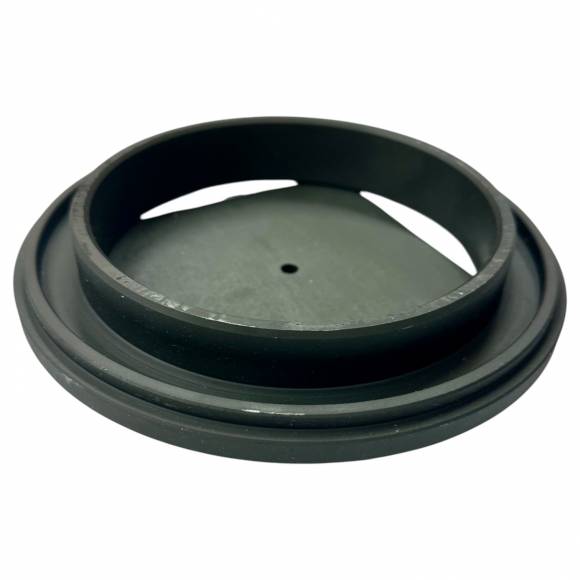
The Problem: A $40 Seal That Can Cost You $15,000
Every John Deere MFWD front axle in the field is one bad seal away from a catastrophic shop bill. When a wheel hub seal fails, gear oil escapes the planetary, water and grit invade the hub, and within a few hours of operation the bearings, sun gear, and ring gear can all be on the failure path. Operators rarely notice until oil is dripping onto the rim or a vibration starts in the front end — and by then, the damage is done. The seal itself is inexpensive. The cost of installing it incorrectly is not.
- Square seating, every time: The JDG761 drives the seal evenly around its full circumference, eliminating the cocked-seal failures common with hammer-and-punch installs.
- Correct installation depth: Stops the seal at the OEM-spec depth so the lip lands on the unworn portion of the spindle sealing surface.
- No seal-lip damage: Distributes installation force on the seal's outer case — never on the rubber sealing element or garter spring.
- Repeatable across the fleet: Every tech in your shop installs the seal the same way, so warranty comebacks drop to near zero.
- Built to outlast the tractor: Hardened, machined steel construction designed for daily professional service — not a one-time "borrow and break" tool.
Why the JDG761 MFWD Wheel Hub Seal Installer Earns Its Place on the Bench
The JDG761 is engineered for one job and engineered to do it right. The seal-driving face is machined to match the outer diameter of the John Deere MFWD wheel hub seal so that all installation force is transferred to the seal's metal case — not the lip, not the spring, not the dust shield. The pilot register keeps the tool concentric with the hub bore as the seal travels in, so the seal can't tip during the press. And the shoulder stops the seal at the correct depth — no measuring, no guessing, no "looks about right." Compared to the field-expedient methods that cause most premature seal failures — a flat block of wood, a deep socket, the back of a ball-peen — the JDG761 turns a high-risk job into a five-minute press.
For a fleet shop, the math is simple. A tube of correctly installed seals leaves the shop and stays in the field. A tube of cocked, distorted, or over-driven seals comes back as warranty work, leaks gear oil onto a customer's barn floor, or — worst case — destroys a $4,000 planetary set the next time the tractor pulls a heavy implement. The ATCJDG761 pays for itself the first time a senior tech doesn't have to redo a junior tech's hub job.
How MFWD Wheel Hub Seals Actually Fail
To understand why the right installation tool matters, you have to understand how these seals fail in service. The MFWD wheel hub seal is a dynamic radial lip seal — it has a stationary outer case pressed into the hub bore, and a flexible lip held against the rotating spindle by a garter spring. For the seal to do its job, three things have to be true at the moment of installation: the outer case must be perpendicular to the hub bore, the seal must be at the correct depth, and the lip must be undamaged.
When a tech drives the seal in with a punch on one side and walks it in around the perimeter, the seal goes in cocked. A cocked seal puts uneven load on the lip — heavier on one side, lighter on the other. The heavier side wears the spindle prematurely and grooves it. The lighter side leaks. This is the classic "I just put a new seal in last month and it's already weeping" comeback.
When a tech drives the seal too deep, the lip lands on a worn or galled section of the spindle, and the seal can't seal a surface that's no longer round. Drive it not deep enough, and the lip rides off the spindle entirely or the dust shield bottoms out on the hub face. Either way, the seal fails — usually within the first 200 hours.
When a tech drives the seal with a tool that contacts the rubber instead of the case, the lip distorts permanently. The garter spring slips off. The dust lip folds. The seal looks fine on the bench, but it leaves the shop already failed.
The JDG761 makes all three failure modes physically impossible. That's the entire value proposition.
Real-World Case Scenarios From the Shop Floor
Scenario 1 — The corn-season callout. A 7R-series tractor with an MFWD front axle starts dripping oil onto the customer's headlands during corn silage. The customer calls. A tech rolls a service truck and finds the right-hand front hub weeping. He pulls the wheel, the hub, the seal, and the bearing cone — bearing cone is fine, spindle is fine, seal is cocked. The previous tech, three months ago, drove that seal in with a 2x4 and a hammer. The shop eats the second seal job, the labor, the gear oil, the road call, and the goodwill credit on a busy customer in a busy week.
Scenario 2 — The pre-season fleet refresh. A custom-harvest operation runs eight 8R-series tractors. Every winter, the shop pulls the front hubs, inspects the bearings, and renews the wheel hub seals as preventive maintenance. With the JDG761, each seal goes in square, to depth, in under five minutes. Spring start-up: zero leaks, zero comebacks, zero downtime. Without the right tool, even one cocked seal in eight tractors is a road call during planting — the most expensive hour of the year.
Scenario 3 — The auction-tractor turnaround. A used-equipment dealer buys an off-lease MFWD tractor with a clean spindle but a tired seal. With a $205 tool and a $40 seal, the tractor goes from "leaking front hub" to "fresh seal, ready to retail" in one bay-hour. Without the tool, the tractor goes back on the line at half the price.
Where the Wheel Hub Seal Lives in the Service Schedule
The MFWD wheel hub seal is not a "wear it out and replace it" item — it's a "renew it any time you're in there" item. John Deere service literature calls for hub seal replacement during any of the following service events: front wheel bearing service, planetary gear inspection or repair, axle housing seal replacement, brake service that requires hub removal, and any oil-leak diagnosis that traces back to the hub. In other words, every time the hub comes off, the seal goes back in new. Trying to reuse a seal that's been pulled is asking for a comeback — the lip has already taken a set against the spindle, and re-installing it almost always introduces the cocked-seal failure mode discussed above.
Smart fleet shops also build the wheel hub seal into their preventive maintenance schedule on a fixed-hour interval — typically every 2,000 hours or annually, whichever comes first, on tractors that work in wet, muddy, or chemically aggressive environments (dairies, feed yards, vegetable row-crop). The tool pays for itself the first PM cycle.
Fleet-Level ROI: Doing the Math
Take a mid-sized agricultural service shop running 25 MFWD tractor accounts. At one wheel hub seal job per tractor per year — a conservative number — that's 50 hub seals annually (two front hubs per tractor). Industry comeback rates on hammer-installed seals run 8–12% on the conservative end. That's four to six seal comebacks per year, each costing the shop roughly two billable hours of labor, the part, the gear oil, and a road call charge that rarely gets fully recovered. At a $145/hour shop rate, that's between $2,500 and $4,000 of comeback labor per year — completely avoidable.
The JDG761 is a one-time $205 purchase. It eliminates virtually every cocked-seal comeback. Payback period: approximately one comeback. Service life: indefinite. Even a single-tech mobile service operation breaks even on the tool inside the first quarter of normal use.
FAQ — Wheel Hub Seal Installation Questions From the Field
Q: Can I install a John Deere MFWD wheel hub seal with a generic seal driver kit?
Generic seal-driver discs almost never match the exact OD of the JD MFWD seal. Close isn't good enough — if the driver overhangs the seal case, it contacts the lip; if it's undersized, it cocks the seal. The JDG761 is dimensioned specifically for this seal.
Q: How do I know if my old seal failed because of installation error vs. normal wear?
Pull the seal and look at the wear pattern. A uniform polished band all the way around the lip means the seal wore out normally. A wear band that's heavy on one side and light on the other — or a lip that's grooved on only part of its circumference — means the seal was installed cocked. Spindle inspection tells the same story: even polishing vs. one-sided galling.
Q: Does the JDG761 fit all John Deere MFWD axles?
The JDG761 is built to John Deere's published specification for the MFWD wheel hub seal application. Always cross-reference your tractor's serial number, axle code, and seal part number against the John Deere parts catalog before installation. Apex Tool Company can help verify fitment — call 812-579-5478.
Q: What's the right press to use with the JDG761 — shop press or hand-driven?
Most technicians hand-drive the JDG761 with a dead-blow or brass mallet on the strike face. The seal goes in with surprisingly little force when the tool is square and the hub is supported. A shop press is fine but rarely necessary for this application.
Q: Do I need to lubricate the seal before installation?
Yes. Lightly coat the seal lip with clean axle oil (the same oil that will be in the hub) and the OD with a thin film as well. Never use grease on the lip — it can prevent the lip from properly contacting the spindle on first rotation.
Q: My spindle has a slight wear groove. New seal or new spindle?
If the groove is shallow and the seal lip can be repositioned by installing the seal at slightly different depth, a fresh seal can sometimes seal on a virgin section of the spindle — the JDG761 makes precise depth control possible. If the groove is deep or the surface is galled, the spindle has to be replaced or sleeved. No seal will hold long-term against a damaged spindle.
Q: How do I store the JDG761 between jobs?
Wipe it down, give the seal-contact face a light coat of oil, and store it in a dry tool drawer or padded case. Hardened steel doesn't rust easily but a film of oil keeps the precision face perfect for years.
Q: Is this tool worth it for a one-tractor farm?
If you own an MFWD tractor and you do your own front-end work, yes. One ruined seal job — one trip to the dealer for a planetary repair — costs more than the tool. Buy it, use it, lend it to your neighbor.
Stop Replacing Seals Twice.
The ATCJDG761 John Deere MFWD Wheel Hub Seal Installer is in stock and ships free on continental US orders over $500. Just $205.00 — and it pays for itself the first time you don't have to redo a hub job.
Order the ATCJDG761 — $205.00 →Apex Tool Company • 812-579-5478 / 800-365-2233 • Mon–Fri 8 a.m.–5 p.m. ET
overall rating:
my rating:
log in to rate