
Blog
Step-by-Step Professional Cylinder Honing: Complete Procedure Using BRM GBD6 Flex-Hone
Professional technique for precise cylinder wall preparation and crosshatch finish using flexible abrasive honing technology.
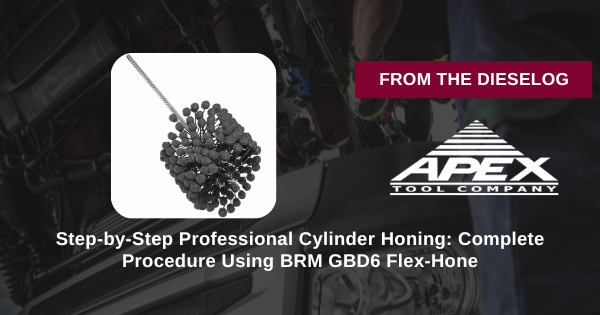
Professional technicians follow this exact procedure for accurate cylinder wall conditioning using the BRM GBD6 Flex-Hone. Proper technique ensures the precise crosshatch finish required for optimal piston ring seating and engine performance.
Introduction: Professional Cylinder Honing Technique
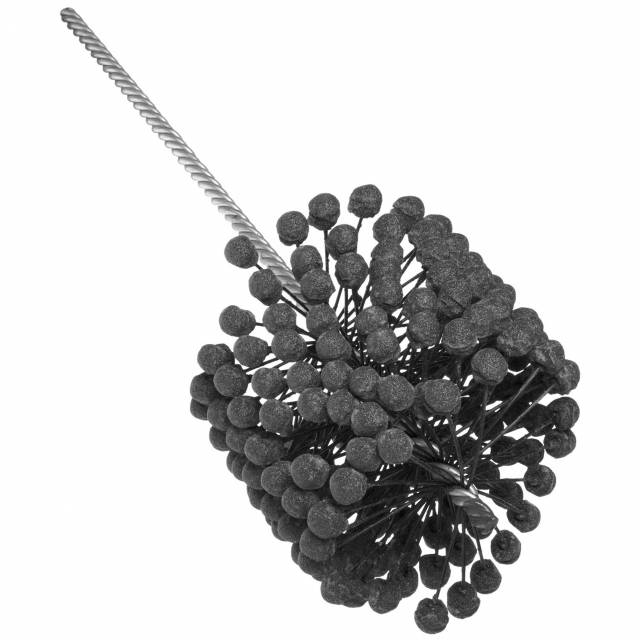
Professional cylinder honing is a precision procedure that requires proper technique, correct tooling, and careful attention to crosshatch geometry. Improper honing produces poor ring seating, extended break-in periods, and customer dissatisfaction. The BRM GBD6 Flex-Hone provides the flexible abrasive technology needed; this procedure ensures it is used correctly to produce the optimal crosshatch finish.
Phase 1: Block Preparation & Bore Inspection
- Secure engine block in honing machine or vise – Block must be stable and cannot rock or shift during honing operation.
- Verify cylinder bore diameter within range (5-1/2" to 6") – GBD6 is sized for this specific range. Verify bore is within specification before proceeding.
- Visually inspect cylinder bore for damage – Look for scoring, corrosion, or previous honing damage. Severe scoring may require professional reboring before honing.
- Clean cylinder bore with solvent and brush – Remove all oil, debris, and machining residue. Clean bore enables better surface finish during honing.
- Measure bore diameter at top, middle, and bottom – Document initial bore size. Honing should remove minimal material (0.0005–0.001 inches only).
Phase 2: Honing Machine Setup & Tool Installation
- Select low-speed drill or honing machine – Flex-Hone operates best at 300–700 RPM (never exceed 1,000 RPM). High speed causes excessive heat and tool wear.
- Install GBD6 Flex-Hone in drill chuck or honing machine spindle – Ensure installation is centered and secure. Tool runout must be minimal for uniform honing.
- Apply honing oil to cylinder bore – Use appropriate cutting/honing oil. Oil cools the tool, removes debris, and extends tool life. Never hone dry.
- Lower honing tool into cylinder bore gently – Flex-Hone should be centered in bore without forcing. Abrasive globules will expand as tool rotates.
- Verify tool is centered and balanced – Machine should run smoothly without vibration. Any vibration indicates misalignment or binding.
Phase 3: Cylinder Honing Operation
- Start rotating honing tool at low speed (300–500 RPM) – Begin honing with gentle downward pressure. Tool expands as rotation begins.
- Gradually increase spindle speed to 600–700 RPM – Abrasive globules conform to bore geometry as speed increases. Smooth operation without vibration is normal.
- Begin vertical stroking motion (up and down in bore) – Vertical stroking combined with rotation creates crosshatch pattern. Stroke speed should be steady, approximately 80–120 strokes per minute.
- Maintain continuous honing oil supply – Oil must flow freely to bore. Dry honing causes excessive tool wear and poor surface finish. Check oil supply frequently during operation.
- Monitor honing progress (typically 2–5 minutes per cylinder) – Honing time depends on initial bore condition and desired surface finish. Over-honing removes excessive material and changes bore geometry.
- Listen and feel for consistent cutting action – Uniform resistance during stroking indicates proper contact. Sudden changes suggest binding or misalignment—stop and investigate.
Phase 4: Crosshatch Verification & Finish Assessment
- Reduce spindle speed gradually to 300 RPM – Slow rotation before removing tool from bore.
- Carefully withdraw honing tool from cylinder – Stop tool rotation after complete withdrawal. Remove and clean tool immediately after use.
- Visually inspect honed bore surface for crosshatch pattern – Proper crosshatch should show diagonal lines at 25–35° angle crossing vertically, creating diamond pattern throughout bore.
- Assess surface finish texture with finger touch – Honed surface should feel smooth with controlled texture. Excessive roughness or glazing indicates improper honing.
- Verify bore diameter after honing – Measure bore at top, middle, and bottom. Diameter change should be 0.0005–0.001 inches. Out-of-round should not exceed 0.0005 inches.
- Confirm crosshatch angle with honing angle gauge if available – Optimal angle: 25–35°. Incorrect angle reduces ring seating efficiency.
Phase 5: Bore Cleaning & Oil Removal
- Flood bore with cleaning solvent – Remove all honing oil and metal debris from bore. Oil remaining on bore interferes with piston ring installation.
- Scrub bore with soft brush and solvent – Use brass or soft nylon brush (not steel). Gentle scrubbing removes particles trapped in crosshatch pattern.
- Dry bore thoroughly with clean cloth – All moisture and oil must be removed. Dry bore is essential for proper ring installation and seating.
- Verify bore is completely clean and dry – Final inspection confirms ready for piston ring installation. No oil residue should be visible.
Phase 6: Ring Installation & Performance Verification
- Install new piston rings according to engine specification – Proper ring installation on clean, properly honed bore ensures optimal seating and performance.
- Monitor engine break-in period (typically 500–1,000 miles) – Proper crosshatch finish enables quick ring seating. Break-in period should show progressive performance improvement.
- Observe oil consumption during break-in – Properly honed cylinder with good crosshatch shows minimal oil consumption. Excessive oil consumption indicates poor honing or defective rings.
- Confirm engine reaches full power output post-break-in – Proper ring seating from good honing delivers full engine power. Any power deficit suggests honing problem or ring issue.
- Document honing procedure in engine service records – Maintain permanent record of bore diameter before/after honing, crosshatch assessment, and break-in observations.
Critical Safety & Procedure Warnings
Never Commit These Mistakes:
- ❌ Never exceed 1,000 RPM spindle speed – High speed causes excessive heat, tool wear, and poor surface finish. Stay in 300–700 RPM range.
- ❌ Never hone without adequate honing oil – Dry honing damages tool and produces poor surface finish. Continuous oil supply essential throughout operation.
- ❌ Never over-hone (remove excessive material) – Honing should remove only 0.0005–0.001 inches. Over-honing changes bore diameter and defeats ring seating benefits.
- ❌ Never skip crosshatch verification – Poor crosshatch pattern compromises ring seating and oil control. Always verify 25–35° crosshatch angle.
- ❌ Never install rings on oily or wet bore – Oil interferes with ring seating. Always clean and dry bore completely after honing.
- ❌ Never use inadequate block securing – Block must be stable and fixed. Movement during honing creates out-of-round conditions.
- ❌ Never skip bore measurement verification – Verify bore diameter before/after honing. Excessive diameter change indicates honing error.
- ❌ Never skip break-in period observation – Monitor engine performance and oil consumption. Problems indicate honing issue requiring correction.
Frequently Asked Questions
Q: What is the optimal crosshatch angle for ring seating?
A: Optimal crosshatch angle is 25–35°. This angle provides optimal oil retention and ring seating guidance. Too steep or too shallow reduces ring seating efficiency.
Q: How much material should honing remove from bore?
A: Honing should remove only 0.0005–0.001 inches of material. Over-honing removes excessive material, changes bore diameter, and creates out-of-round conditions.
Q: Can GBD6 be used on aluminum cylinders?
A: GBD6 is designed for cast iron and steel cylinders. Aluminum cylinders require softer abrasive to prevent galling. Consult tool specifications for aluminum honing.
Q: How long does GBD6 Flex-Hone typically last?
A: Tool life depends on use. With proper honing oil, low spindle speed (300–700 RPM), and correct technique, a single GBD6 can hone dozens of cylinders. Tool life reduces with high speed, inadequate cooling, or over-honing.
Professional Honing Ensures Ring Seating Success
Get BRM GBD6 – $127.30Key Takeaways
- BRM GBD6 Flex-Hone is essential for professional cylinder honing on 5-1/2" to 6" bores
- Proper procedure ensures 25–35° crosshatch finish for optimal ring seating
- Flexible abrasive globules conform to bore geometry without tapering or out-of-round
- Low spindle speed (300–700 RPM) with continuous honing oil prevents heat and tool damage
- Honing should remove only 0.0005–0.001 inches of material for precision results
- Complete bore cleaning and drying essential before piston ring installation
- Proper honing reduces engine break-in time and ensures warranty-free performance
overall rating:
my rating:
log in to rate