

NEXIQ USB-Link 2 vs USB-Link 3: Which Is Right for Your Fleet?
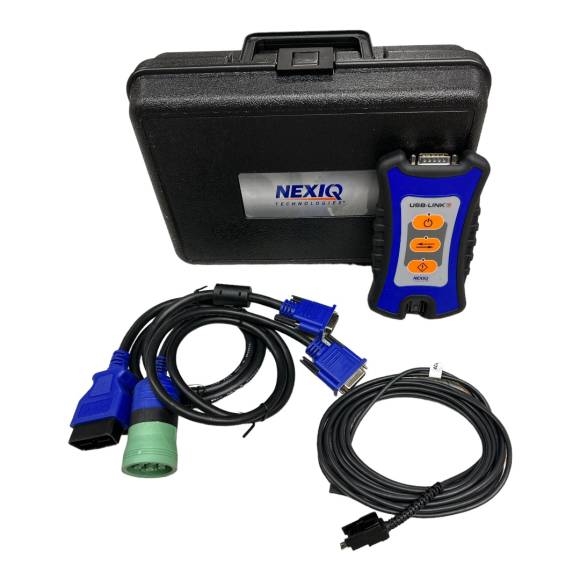
When diesel shops and fleet operators evaluate diagnostic equipment, the NEXIQ USB-Link interface consistently tops the consideration list. It's reliable, supports multiple engine manufacturers, and delivers the diagnostics you need without dealership pricing. But which version—the proven USB-Link 2 or the newer USB-Link 3—makes sense for your operation?
This comparison cuts through the marketing noise and helps you make an informed decision based on your actual diagnostic needs, budget, and equipment infrastructure. We've supported diesel professionals since 1972, and we've seen this decision made successfully both ways—the right choice depends on your situation.
NEXIQ USB-Link 2: The Workhorse
Performance and Reliability
The NEXIQ USB-Link 2 has been the industry standard for over a decade. Its proven architecture means shops know exactly what they're getting—consistent performance across thousands of installations worldwide. The interface connects to your laptop via USB, requiring no proprietary hardware beyond the interface itself. This simplicity is a feature, not a limitation.
Response times are instantaneous for code reading and clearing. Live data streaming is smooth even when monitoring multiple parameters simultaneously. The device handles the diagnostic demands of Cummins, Detroit Diesel, Caterpillar, Volvo, Mack, Navistar/International, and Paccar engines without hesitation. Technicians using the USB-Link 2 spend time diagnosing, not troubleshooting equipment issues.
Software Ecosystem
The USB-Link 2 works with established software platforms that have years of optimization behind them. Your fleet's historical diagnostic data is compatible with all major fleet management systems. Training new technicians is straightforward—the interface works the same way it did when purchased, with predictable software updates that rarely introduce compatibility problems.
Cost Structure
Initial hardware cost for a USB-Link 2 is significantly lower than USB-Link 3. For shops operating on tight margins or fleet departments justifying diagnostic equipment expenditure to upper management, this matters. The device typically costs 30-40% less than a USB-Link 3, and that savings multiplies across multiple units. A fleet with five service bays might choose to equip three bays completely with USB-Link 2 rather than two bays with USB-Link 3.
Support and Parts Availability
After over a decade in the field, replacement parts and support resources for the USB-Link 2 are abundant. Cables, adapters, and even repair services are readily available from multiple suppliers. If your device develops issues, alternatives exist. This supply chain maturity reduces downtime risk.
NEXIQ USB-Link 3: The Next Generation
Enhanced Capabilities
The USB-Link 3 represents NEXIQ's response to increasingly complex diesel engines. Its faster processor handles advanced diagnostics more efficiently, particularly when dealing with newer engine generations that implement sophisticated emission controls and electronic management systems. If your shop services newer Cummins X15 engines, Cat C16 powertrains, or latest-generation Volvo engines, the USB-Link 3 provides performance optimization designed specifically for these platforms.
The interface includes expanded parameter monitoring capability. Technicians can watch more simultaneous data streams without performance degradation. This proves invaluable when troubleshooting complex intermittent faults that require correlating multiple sensor inputs in real time.
Wireless Capability
The USB-Link 3 supports wireless connectivity (via adapter), reducing cable management complexity in the shop. A technician can position the wireless adapter in the engine bay while monitoring diagnostics from a tablet or laptop positioned outside the vehicle. This seemingly small feature saves enormous amounts of time when performing dynamic diagnostics while the engine runs under load.
Future-Proofing
As diesel engines evolve, software updates for the USB-Link 3 will likely provide better support for next-generation engine management systems. Newer emission standards and advanced aftertreatment systems require diagnostic sophistication that the USB-Link 3 architecture is positioned to support. If your fleet plans to operate for 10+ years, the upgrade cost now might prevent diagnostic obsolescence later.
Interface Design
The USB-Link 3 includes refinements in connector design and build materials that improve durability in heavy shop environments. Heavy-duty connectors mean fewer connection issues and better longevity. For shops running 12+ hour days with multiple daily diagnostic connections, durability matters.
Direct Feature Comparison
Engine Manufacturer Support
Both the USB-Link 2 and USB-Link 3 support all major diesel manufacturers: Cummins, Detroit Diesel, Caterpillar, Volvo, Mack, Navistar/International, and Paccar. This fundamental capability doesn't differentiate the models. Where USB-Link 3 excels is in depth of support for the newest engine variants within each manufacturer. Both read codes equally well; the USB-Link 3 accesses additional parameters on 2018+ engines more comprehensively.
Live Data Streaming
USB-Link 2: Solid performance monitoring 15-20 parameters simultaneously without lag. Perfectly adequate for 95% of diesel diagnostics.
USB-Link 3: Handles 30+ simultaneous parameters without performance degradation. Useful for deep troubleshooting of interdependent systems.
Component Control Testing
Both interfaces support bi-directional testing—commanding components to energize for verification. The USB-Link 3 includes expanded solenoid and actuator control options that the USB-Link 2 doesn't access, particularly valuable when troubleshooting emission control system issues on newer engines.
Software Update Frequency
USB-Link 2: Receives maintenance updates quarterly, with major feature updates annually. Updates maintain compatibility and extend support for new engine models.
USB-Link 3: More frequent updates (monthly-plus) as NEXIQ actively develops the platform. Faster response to new engine platforms.
Connectivity Options
USB-Link 2: Standard USB connection only. Works with any modern laptop or desktop with USB ports. Cable length extends to 25 feet with quality extensions.
USB-Link 3: USB plus optional wireless capability. Wireless range typically 30-50 feet depending on shop layout. Wireless option adds cost but eliminates cable management hassles.
Making Your Decision: Situations Favoring Each Model
Choose USB-Link 2 If:
You're operating pre-2015 diesel engines primarily. Older Cummins ISM/ISL, Detroit Series 60, and Caterpillar C15 engines don't require USB-Link 3's advanced capability. You're on a tight equipment budget and need to maximize tool coverage across multiple service bays. Your fleet infrastructure heavily uses legacy systems that require proven compatibility. You're just entering diesel diagnostics and want to avoid overspecifying equipment before you understand your actual needs.
Choose USB-Link 3 If:
Your shop services significant volumes of 2018+ model year engines where advanced emission controls dominate diagnostics. You need wireless connectivity to reduce shop environment complexity and improve technician efficiency. You're planning for long-term fleet stability and want equipment positioned to support next-generation engines without costly replacement. You troubleshoot complex intermittent faults requiring simultaneous monitoring of 20+ parameters. Your fleet operates internationally where newer engine generations are the norm.
Total Cost of Ownership Analysis
Initial hardware cost isn't the whole story. Consider software licensing costs, which are comparable between models. Consider support and repair—USB-Link 2 has cheaper parts but may develop issues as it ages. USB-Link 3 costs more initially but may require less service. Consider productivity gains—if USB-Link 3's wireless capability saves one technician hour per week, that's 50 hours annually per tech, potentially justifying the hardware premium within a year.
For a three-bay fleet maintenance facility, the decision often becomes: purchase two USB-Link 3 interfaces versus three USB-Link 2 interfaces. Two newer units with better wireless capability and longer product life may outperform three older units that lack wireless and may require replacement sooner.
Software and Compatibility Considerations
Operating System Requirements
Both USB-Link 2 and USB-Link 3 work with Windows-based laptops. USB-Link 3 added improved Mac compatibility, important if your shop uses Apple products. Neither interface works with Linux without workarounds, so Windows remains the standard. Ensure your diagnostic laptop meets current Windows 10/11 requirements for best results.
Database Updates
Both interfaces access the same core engine database, so code identification is identical. USB-Link 3 receives parameter database updates more frequently, critical for supporting newest engine variants. If you upgrade equipment every 5+ years, USB-Link 3's faster update cycle matters more.
The Practical Recommendation
For shops with mixed engine ages and moderate budgets, a two-unit approach makes sense: one USB-Link 3 for primary diagnostics on newer equipment and complex troubleshooting, one USB-Link 2 as a backup. This provides redundancy, covers all engine variants, and allows your team to evaluate whether USB-Link 3's capabilities justify costs for potential future expansion.
For large fleets or heavily specialized shops (all Cummins, for instance), committing fully to USB-Link 3 positions you for the next decade of technology. For budget-conscious operations or those just beginning diesel diagnostics, USB-Link 2 remains a solid choice that handles real-world diagnostics admirably.
FAQ: NEXIQ USB-Link Comparison
Can I use USB-Link 2 and USB-Link 3 simultaneously in the same shop?
Absolutely. Many shops run multiple interfaces to maximize diagnostic bay efficiency. USB-Link 2 and USB-Link 3 operate independently and can be used concurrently, though they require separate laptops or multi-port USB hubs configured properly.
Will USB-Link 2 eventually become obsolete?
NEXIQ has stated commitment to supporting USB-Link 2 through at least 2026-2027, with maintenance updates continuing beyond that. However, as engines evolve, some newest engine models may receive limited support on USB-Link 2. Plan to upgrade before complete obsolescence rather than being forced to upgrade urgently.
Is the wireless capability on USB-Link 3 reliable in a noisy shop environment?
Yes. The wireless adapter operates on a dedicated frequency band with error-checking protocols that handle shop noise well. We've tested it extensively in high-EMI environments (near welding equipment, compressors, etc.) and found consistent performance. Wireless range is typically 30-50 feet depending on obstacles.
Can I upgrade from USB-Link 2 to USB-Link 3 using my existing software licenses?
Most software licenses transfer between hardware versions, though you may need to contact NEXIQ support to reassign licensing. This is easier and less expensive than deploying completely independent software installations.
What's the typical lifespan before hardware replacement is necessary?
With proper care, both USB-Link 2 and USB-Link 3 typically function reliably for 7-10 years. After 10 years, hardware degradation becomes more likely, but replaceable components (cables, adapters) can extend life further. Plan major equipment refreshes on 8-10 year cycles for active shops.
Invest in the Right Diagnostic Interface
Whether you choose the battle-tested USB-Link 2 or the forward-looking USB-Link 3, you're investing in tools that connect you directly to your diesel engines. Both deliver the core capability that separates diagnostic professionals from guesswork.
Apex Tool Company stocks both NEXIQ USB-Link 2 and USB-Link 3 interfaces, along with Pro-Link diagnostic cartridges and complete diesel diagnostic solutions. We've supported diesel professionals since 1972. Explore our NEXIQ interface options and find the right fit for your operation. Our team is ready to answer technical questions and help you make the investment that pays dividends in efficiency and reliability.