
Blog
Tech Guide: Isolating Power Stroke High-Pressure Oil Leaks
Precision hydraulic diagnostic guidelines for commercial fleet and vehicle technicians.
Diagnosing a low ICP (Injector Control Pressure) issue on a HEUI engine? Learn the professional technician sequence to isolate oil rails and deadhead your pump using the ATCL-TU-32-7 kit.
Why Mechanical Gauges Outperform Sensor Stream Data
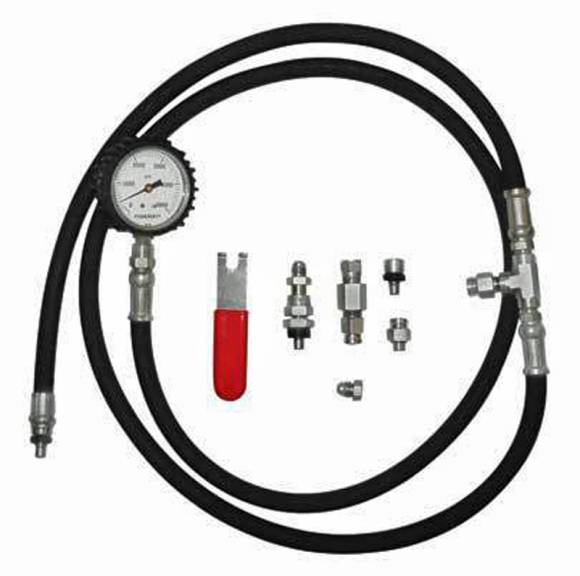
When troubleshooting a Power Stroke engine that fails to build oil pressure, relying solely on an electronic scan tool reading can lead you astray. A faulty Injector Control Pressure (ICP) sensor or a shorted wiring pigtail can report erratic or falsely deflated pressure numbers to the ECM. Mechanically plumbing a high-grade 5,000 PSI analog fluid gauge like the ATCL-TU-32-7 directly into the high-pressure circuit gives you unvarnished, physical truth. If the mechanical gauge matches the sensor, you have a physical oil leak or pump failure; if it reads high while the sensor reads low, you instantly know your problem is electrical. Always anchor your diagnostic routine on true hydraulic readings before removing costly engine covers.
The 5-Step Oil System Diagnostic Sequence
- Access the High-Pressure Circuit: Relieve structural system oil pressure completely. Disconnect the factory high-pressure oil lines extending from the pump to the cylinder heads, taking care to minimize oil drainage.
- Execute an HPOP Deadhead Test: Thread the ATCL-TU-32-7 5000 PSI high-pressure hose and gauge assembly directly to the output port of the high-pressure oil pump using the provided STC or JIC adapters. Seal off any open secondary ports with the matching plugs provided in the kit.
- Crank and Monitor Pump Output: Disconnect the fuel injection control module (FICM) or disable fuel delivery to prevent the engine from starting. Crank the starter motor for 5-10 seconds while keeping your eyes locked onto the analog gauge. A healthy high-pressure oil pump should quickly build pressure past 3,000 PSI; a severely worn pump will struggle to pass 500 PSI.
- Check for Individual Oil Rail Loss: Re-plumb your lines to feed just one cylinder head rail at a time, blocking off the opposite channel with a JIC plug. Crank again to monitor pressure buildup. If one head builds pressure quickly but the other bleeds down immediately, you have successfully narrowed the leak to a bad injector top seal or a torn rail dummy plug inside that specific valve cover.
- Utilize the STC Disconnect Tool for Clean Teardown: Once the diagnostic phase is complete, utilize the included specialized STC release tool to smoothly separate the quick-disconnect lines without scratching the precise fitting seats, preparing the engine block for component replacement.
CRITICAL FLUID HAZARD WARNING:
High-pressure oil systems operate at hydraulic energy levels capable of skin penetration. Always inspect all test hose lines, fitting threads, and O-rings for minor abrasions before applying starter motor cranking pressure. Never attempt to tighten test couplings while the hydraulic circuit is under active load.
Professional HEUI Isolation. Demand Flawless Diagnostics.
Get the ATCL-TU-32-7 High Pressure Master Set
overall rating:
my rating:
log in to rate