
Blog
Universal Wet Cylinder Liner Removal Steps
Precision engine disassembly and wet cylinder liner extraction guidelines for commercial diesel mechanics and field service technicians.
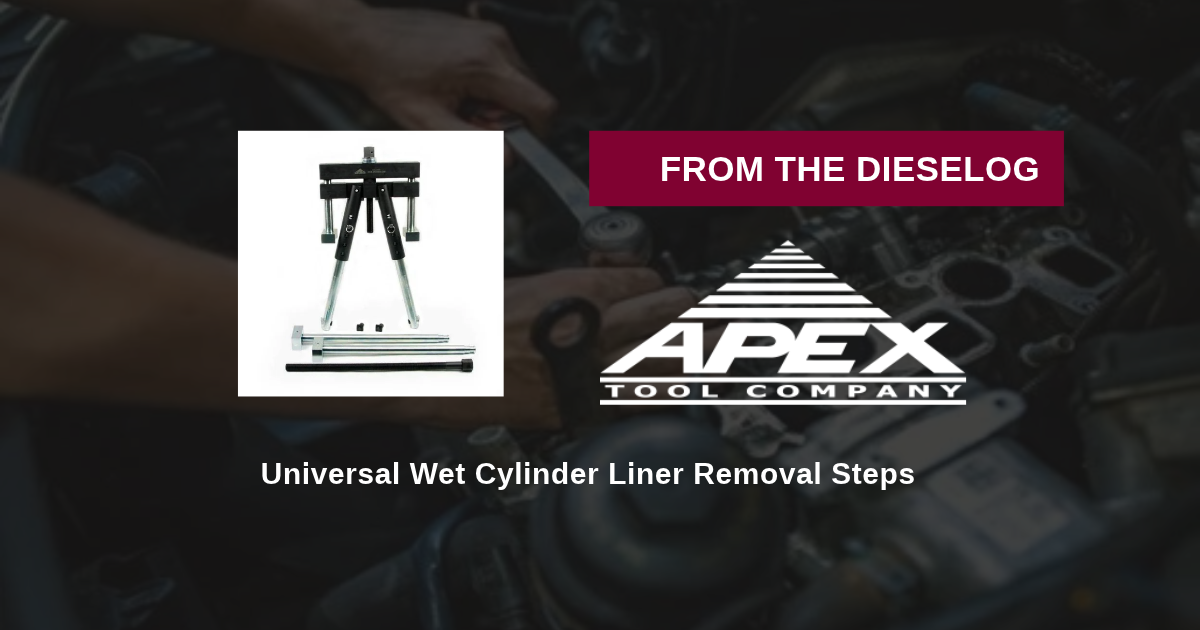
Extracting stubborn, carbon-locked, or corroded wet cylinder liners from a Caterpillar, Cummins, Detroit, or International engine block during an in-frame overhaul? Follow this step-by-step professional workshop procedure to adjust the ATC6400 puller feet, position the support leg bridge, lubricate forcing screw threads, advance the central screw smoothly, and remove wet liners without scoring cylinder block bores.
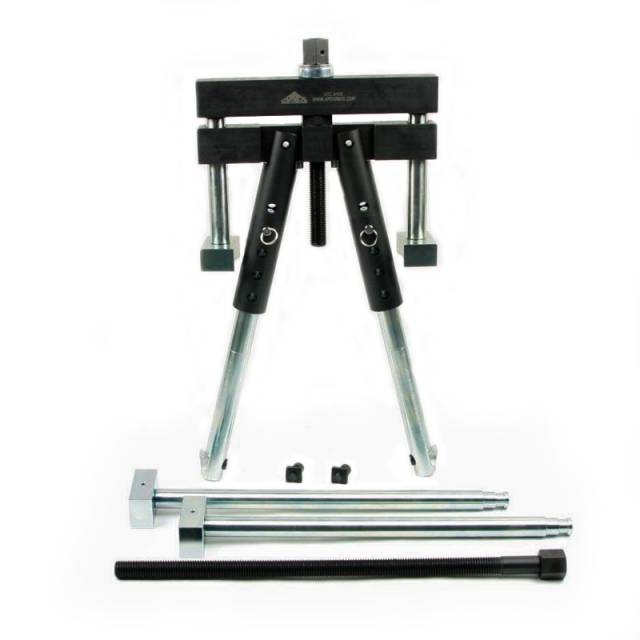
Why Slide Hammers, Weld Beads & Pry Bars Ruin Commercial Engine Blocks
On commercial diesel engines, wet cylinder liners maintain direct contact with engine coolant along their outer walls. Rubber D-rings and Crevice Seals at the bottom of the liner seal coolant away from the oil pan. Over extended service intervals, scale rust, fuel varnish, and carbon accumulate around lower sealing lands, locking the liner tight inside the cast-iron block. Technicians who attempt to extract wet liners using slide hammers, weld beads, or pry bars face catastrophic risks. Prying against the engine block deck face creates intense point loads that crack deck surfaces and distort liner counterbores. Running a weld bead inside a liner to shrink it risks splatter hitting precision crankshaft journals or warping lower block bore lands. Slide hammers apply cocked impact shocks that tilt the liner inside the bore, driving sharp outer liner edges into soft cast iron sealing lands. Scored sealing lands will not seal new liner O-rings, causing immediate coolant contamination in crankcase oil. Utilizing the 44-pound ATC6400 Universal Liner Puller (PT-6400 Equivalent) eliminates extraction risks completely. Its adjustable spring-loaded feet grip the bottom liner rim 100% flush, applying pure axial lifting force to draw wet liners out smoothly.
The 5-Step Universal Wet Liner Removal Protocol
- Clean Bore, Measure Diameter & Apply Penetrating Oil: Remove pistons and connecting rods. Spray penetrating oil around the upper liner flange and lower coolant lands. Verify the liner bore diameter falls between 4.00″ and 6.25″.
- Adjust Puller Feet & Lower ATC6400 Through Bore: Adjust the thin spring-loaded puller feet on the ATC6400 to match the target liner bore diameter. Lower the main shaft assembly down through the cylinder liner until the puller feet pass below the bottom rim.
- Engage Lower Liner Rim & Position Support Leg Bridge: Allow the puller feet to spring outward underneath the lower edge of the liner. Pull up gently on the tool shaft to verify all feet sit 100% flush against the bottom liner rim. Position the heavy support leg bridge squarely over the engine block deck face.
- Lubricate Forcing Screw & Turn Nut to Extract Liner: Apply clean engine oil or thread lubricant to the ATC6400 main forcing screw and thrust bearing. Turn the central forcing nut clockwise using a hand wrench or socket. The tool will draw the wet liner straight upward out of the block.
- Inspect Block Bore Lands & Counterbores: Once the wet liner is removed, clean and inspect lower block sealing lands, O-ring grooves, and upper counterbores for carbon scale, rust, or pitting before installing new cylinder liners.
PRO-TECH PLATFORM COMPATIBILITY & HAND WRENCH MANDATE:
ALWAYS VERIFY ENGINE PLATFORM FITMENT! The ATC6400 works on most Caterpillar, Cummins, Detroit, and International wet-liner engines, BUT WILL NOT WORK ON 12.7L OR 14L EGR DETROIT 60 SERIES ENGINES (Use Part # M30150 for EGR 60 Series)! ALWAYS TURN FORCING SCREWS WITH A HAND WRENCH OR RATCHET—never spin forcing screws at high speed with heavy air impact guns!
44.00 lbs Universal Heavy-Duty Wet Cylinder Liner Puller System. Protect Engine Blocks.
Get the ATC6400 Liner Puller Now – $500.00
overall rating:
my rating:
log in to rate