
Blog
Why the ATC1453185 Is Critical Insurance for Every Paccar MX13 Service
Why one $900 tool prevents the most expensive comeback in diesel service.

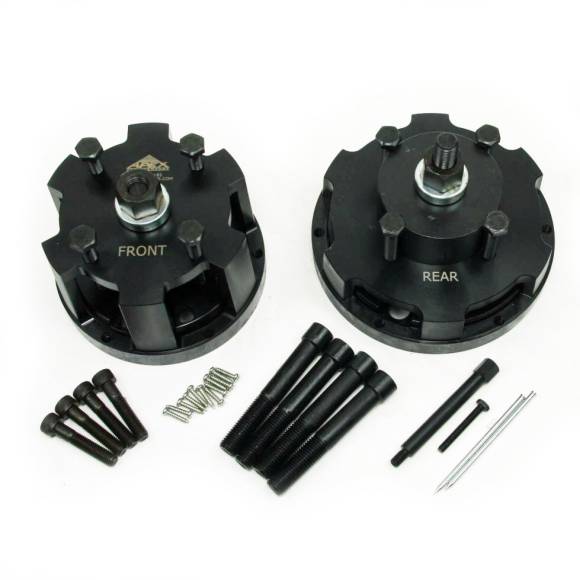
One leaking front or rear crankshaft seal can drain a Paccar MX13 in under 200 highway miles — taking the wear sleeve, harmonic balancer, and crankshaft snout with it. The ATC1453185 is the precision-engineered tool that turns that disaster into a routine 90-minute repair.
The Real Cost of a "Quick" Seal Job Gone Wrong
Every diesel shop has seen it. A Paccar MX13 comes in with a weeping front seal — a 90-minute job billed at four hours. The technician grabs a generic seal driver, hammers the new seal in slightly cocked, and sends the truck back to the customer. Eight hundred miles later that same truck is on the hook, the front of the engine soaked in oil, the harmonic balancer scored, and the crankshaft snout grooved beyond repair. What started as a $900 tool decision turns into a $15,000 short-block — plus three days of downtime for a fleet that doesn't have a spare truck.
The Paccar MX13 is a tight-clearance, high-output 12.9-liter engine with a Belleville-spring-loaded rear main seal and a precision lip-type front seal that ride on chrome-finished sleeves. Both seals depend on three things to live a full service life: square installation, exact depth, and zero damage to the sealing lip during press. Miss any one of those three and the seal will leak — usually within a few hundred miles.
Five Reasons the ATC1453185 Pays for Itself on Job One
- Single Tool, Both Ends: The ATC1453185 services the front and rear crankshaft seals on every Paccar MX, MX-13, MX PMCI-2, and MX-13 PCI engine produced from 2011 through 2016 — no need to buy two separate kits or improvise on the back of the engine.
- Square, Concentric Press Every Time: Pilot bushings index off the crankshaft itself, so the seal cannot cock during installation. Zero distortion of the seal lip means zero leaks at startup.
- Exact OEM Seating Depth: Built-in depth stops match Paccar's published service spec — eliminating the "press it until it bottoms out" guesswork that ruins wear sleeves and shortens seal life.
- Damage-Free Removal Fixtures: The puller plates contact the seal carrier, not the crank snout or rear flange. You'll never gouge a sealing surface or score a chrome sleeve again.
- Built for Repeat Shop Use: Heavy-duty hardened steel components shrug off thousands of cycles. This tool will outlive the technician using it — and the truck it first serviced.
Why Improvising on an MX13 Will Cost You
The temptation to "just tap it in with a socket and a hammer" is real, especially on a Friday afternoon. But the Paccar MX13 punishes shortcuts harder than almost any North American Class 8 engine on the road. Here's what actually happens when a shop tries to install an MX13 crank seal without the ATC1453185:
The seal goes in cocked. Without a piloted driver, the seal enters the bore at an angle of just 1 to 2 degrees. The lip distorts. Initial seating looks fine. Two hundred miles later, the elastomer takes a permanent set in that distorted shape and starts weeping.
The seal goes in too deep. Drive it in until it stops and the seal lip now rides on a worn or scored section of the crank — or worse, off the wear sleeve entirely. You'll have a fresh seal leaking on a perfectly good crank.
The wear sleeve gets scored. The wrong puller — pry bars, slide hammers contacting the snout — leaves marks the new seal can never seal against. Now the repair requires a wear sleeve too, doubling parts cost and adding labor.
At $900, the ATC1453185 costs less than one comeback. One comeback means the customer's truck is back on the lift, you're eating labor, you're eating the seal, you're eating the wear sleeve, and your reputation with that fleet manager is on borrowed time. Order the ATC1453185 once, install it correctly forever.
Where the Paccar MX13 Crankshaft Seals Fail
Crank seal failure on the MX13 typically traces back to one of four root causes — and only one of them has anything to do with the seal itself.
1. Dry-Start Wear: After extended sit time (more than 30 days), oil drains away from the front and rear seal lips. The first 5–10 seconds of cold cranking run the lip dry. Repeated dry starts harden the elastomer and wear a groove into the sleeve. The fix isn't a better seal — it's pre-lubricating the seal with clean engine oil at installation and avoiding extended cold-soak conditions when possible.
2. Excessive Crankcase Pressure: A plugged crankcase breather or failing CCV separator pressurizes the case. That pressure pushes outward on every seal in the engine. The rear main seal, sitting between the case and the flywheel housing, is usually the first casualty. Always check breather function before condemning a seal.
3. Improper Installation: By far the most common cause — and the one the ATC1453185 eliminates entirely. Off-square seating, wrong depth, damaged lip during install, contaminated bore, or running the tool with debris in the seal pocket all guarantee a leak.
4. Worn Sleeves and Damaged Sealing Surfaces: If the chrome wear sleeve has a visible groove or the crank snout is scored, no seal — regardless of installation quality — will hold for long. Inspect both sealing surfaces every time a seal comes out.
Real-World Scenario: The Fleet That Got It Right
A regional LTL carrier running 47 Kenworth T680s with Paccar MX13 power was averaging 1.8 front crank seal comebacks per month across the fleet. Average comeback cost: $1,900 in parts, labor, and rental tractor expense. Annual bleed: roughly $41,000.
The shop manager invested $900 in the ATC1453185 and standardized every front and rear crankshaft seal service on the tool. He also added two checks to the work order: pre-lubricate the seal lip with clean engine oil, and verify crankcase breather flow with a manometer before reassembly.
Twelve months later: zero seal comebacks. The ATC1453185 paid for itself in the first 22 days of use and is now the most-used precision tool on the bench. That's the math every fleet shop should run on every Paccar MX13 in their care.
Maintenance-Schedule Context: When to Replace the Seals
Paccar does not publish a calendar-based replacement interval for the front or rear crankshaft seals on the MX13 — they're "condition-based" components. That said, professional shops use these triggers:
- Any visible oil weep at the front timing cover or rear flywheel housing seam
- During any front gear housing service or harmonic balancer replacement
- During any flywheel, clutch, or rear main bearing service
- At any in-frame or out-of-frame overhaul as preventative replacement
- Whenever a crank-driven accessory drive is removed for service
Replacing the seals during these scheduled services costs almost nothing in incremental labor — but skipping it guarantees a repeat tear-down within months. The ATC1453185 makes preventative replacement a 20-minute task instead of a 2-hour fight.
What Makes the Paccar MX13 Different from Other Class 8 Engines
Understanding why crankshaft seal service on the MX13 demands a precision tool starts with understanding the engine itself. Paccar designed the MX13 as a clean-sheet European-engineered platform (it shares heritage with the DAF MX engine family) and brought it to North America in 2010 for the 2011 model year. Compared to legacy Class 8 powerplants like the Cummins ISX or Detroit DD15, the MX13 runs:
- Tighter main bearing clearances for improved fuel economy and reduced parasitic loss
- Higher peak cylinder pressures due to the high-compression combustion strategy
- A specifically engineered harmonic damper system with tight runout tolerances at the front of the crankshaft
- An integrated rear seal carrier built into the rear cover, requiring careful removal technique
- Hardened chrome wear sleeves on both crank ends that absorb seal lip wear over time
Every one of those design choices makes the crankshaft seals less forgiving of installation error than the engines they replaced. A seal that "kinda worked" on an older mechanical-injected engine will fail catastrophically on an MX13 within the first thousand miles. The ATC1453185 exists because Paccar engineered an engine that demands precision — and precision demands the right tool.
Fleet-Level ROI: The Math Behind the Tool
Consider a 25-truck fleet running Paccar MX13 engines on long-haul duty cycles. Industry average front + rear seal failure rate sits around 8% annually with proper maintenance — about 2 seal events per year on a fleet that size. Without the ATC1453185, a comeback rate of 30–40% on those repairs is common.
The math:
- Comeback labor: 6 hours at $145/hr shop rate = $870
- Replacement seal: $85–$140
- Wear sleeve (50% of comebacks): $180–$320
- Rental tractor while truck is down: $350–$600 per day
- Lost revenue per downed truck: $1,200–$1,800 per day
One comeback wipes out two and a half ATC1453185 tools in real cost. The ROI question isn't whether to buy this tool — it's why anyone running an MX13 service shop wouldn't have already.
Kenworth and Peterbilt Service Bay Reality
If your shop services Kenworth T680, T880, or W990 tractors — or Peterbilt 579, 567, or 389 spec'd with Paccar MX power — you're seeing this engine every week. The MX13 became the dominant proprietary engine across the Paccar truck lineup, and warranty service work follows the truck even after the standard powertrain coverage ends. Independent shops handling these trucks face two realities:
First, customers expect dealer-equivalent results. A fleet manager who pulls his truck out of a Kenworth dealer for the last six months of its life doesn't expect a lower quality of crankshaft seal repair from your shop than he was getting on warranty. The ATC1453185 lets you deliver dealer-spec results — because it's the same class of precision tool the dealer is using.
Second, the Paccar cross-reference 1453185PE is the part number every dealer parts counter recognizes. When you call to verify fitment or order related seal kits, that's the reference you'll be quoting. The ATC1453185 directly fulfills that OEM tool requirement at a fraction of dealer pricing — and it ships same-day from Apex.
The Technician Perspective: Why Pros Demand the Right Tool
Talk to any technician who's done more than a handful of MX13 crank seal jobs and they'll tell you the same thing: the difference between a 90-minute job and a 4-hour fight is the tool on the bench. Improvising on this engine isn't a badge of resourcefulness — it's a fast track to a comeback ticket with your name on it.
The ATC1453185 isn't a luxury, it's standard equipment for anyone serious about MX13 work. The pilot bushings eliminate operator error on the install. The depth stop eliminates over-press. The removal fixtures eliminate sleeve damage. What's left? Just doing the job — clean, fast, right the first time. That's what a precision service tool actually means in practice. It removes the variables that turn skilled labor into rework.
Diagnosing a Leaking Crank Seal Before You Tear Down
Not every oil leak at the front or rear of a Paccar MX13 is actually a crankshaft seal. Misdiagnosing a leak — and tearing into the engine to replace a perfectly good seal — wastes shop hours and customer trust. Before you commit to seal replacement, run this diagnostic sequence:
Confirm the leak source with UV dye or talc. Wipe down the front timing cover area (or rear flywheel housing area) completely. Run the engine through a normal warm-up cycle, then a short road test. If the seal is the leak source, you'll see fresh oil emerging from the seal area itself — not running down from a higher point on the engine. UV dye in the oil and a black light makes this trivially obvious in five minutes.
Rule out the timing cover gasket and rear cover gasket first. These joints sit above the crankshaft seal and oil running down from a leaking gasket easily looks like a seal leak. Inspect each gasket seam carefully under good light. A gasket leak is a different repair entirely — and one that doesn't require the ATC1453185.
Check crankcase pressure. Hook a manometer to the oil fill or dipstick tube. Excessive positive crankcase pressure means the CCV system is plugged or the breather is failing — and that's pushing your seal out, not a seal that failed independently. Fix the ventilation first or your new seal will leak too.
Verify the engine is the correct platform for the ATC1453185. Quick check on the engine ID plate: Paccar MX, MX-13, MX-13 PCI, MX PMCI-2 from 2011–2016 are all covered. If you're working on an MX-11 or a pre-2011 build, confirm with Apex (call 812-579-5478) before ordering tooling.
This 30-minute diagnostic protocol prevents the most expensive mistake in MX13 service: tearing into a perfectly good seal because the actual leak was a $40 gasket. Diagnose first, tear down second.
Frequently Asked Questions
Q: Does the ATC1453185 work on both the front and rear crankshaft seal?
A: Yes. The kit is engineered as a complete service solution for both the front and rear crankshaft seals on all Paccar MX-series engines, including MX13, MX PMCI-2, and MX-13 PCI variants from 2011–2016.
Q: Will this tool work on Kenworth and Peterbilt trucks?
A: Yes. The Paccar MX13 is the OE powerplant in both Kenworth (T680, T880, W990) and Peterbilt (579, 567, 389 spec'd with MX) Class 8 trucks. Cross-reference part number 1453185PE.
Q: Can one technician operate this tool alone?
A: Absolutely. The piloted design and integrated press-screw mechanism mean a single technician can remove and install both front and rear seals without a helper.
Q: Do I need to remove the crankshaft to use this tool?
A: No. The ATC1453185 is designed for in-chassis service — the crankshaft stays in place. You only need to remove the harmonic balancer (front) or the flywheel and rear cover plate (rear), depending on which seal you're servicing.
Q: Will this damage the chrome wear sleeve during seal removal?
A: No. The removal fixtures contact only the steel carrier of the seal, never the wear sleeve or crankshaft surface. That's the entire point of using a precision tool over a generic puller.
Q: How long does a typical front seal job take with this tool?
A: Once the harmonic balancer is off, the front seal removal and installation is roughly a 20–30 minute task. Rear seal service adds time for flywheel removal but the tool work itself is similar.
Q: Is shipping fast?
A: Yes. The ATC1453185 ships same-day from Apex Tool Company on most orders placed before 2 p.m. ET. Free continental U.S. shipping on orders over $500.
Q: What's the warranty?
A: The tool carries Apex's standard manufacturer warranty against defects. Call 812-579-5478 for full warranty details.
Stop Eating Comebacks. Start Pressing Seals Right.
The ATC1453185 — $900. The next crankshaft you save — priceless.
In Stock. Same-Day Shipping. Free Shipping Over $500.
📞 812-579-5478 / 800-365-2233 | Mon–Fri 8 a.m. – 5 p.m. ET
overall rating:
my rating:
log in to rate