

A weeping front crankshaft seal on a 6.0L Power Stroke is never just an oil drip — it's a contaminated belt, a soaked accessory drive, and a comeback waiting to happen. Pull it wrong, and you score a crank snout that turns a $200 repair into a teardown.
The Hidden Cost of a Front Crankshaft Seal Leak
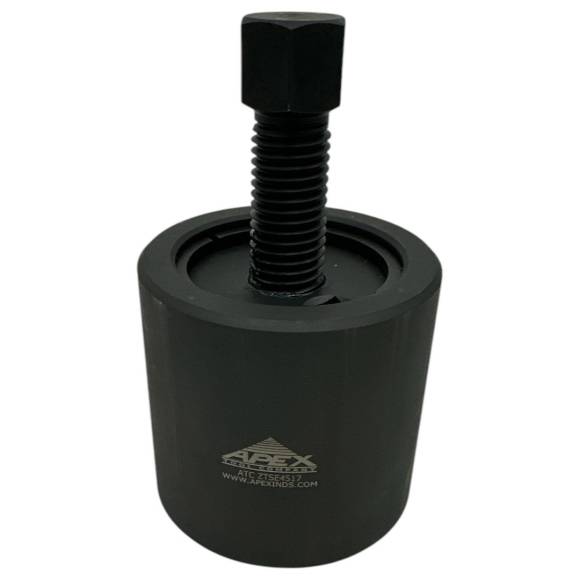
On the 6.0L Power Stroke, the front crankshaft oil seal lives in a high-heat, high-pressure environment directly behind the harmonic balancer. Years of heat cycling harden the elastomer, the seal lip loses tension, and oil migrates forward — onto the serpentine belt, the front cover, the radiator support, and the shop floor. Left alone, that leak strips the belt, glazes pulleys, and accelerates accessory failure. But the real damage often happens during the repair: prying, picking, and slide-hammering a stubborn seal scores the crank snout and distorts the seal bore. The ATCZTSE4517 exists to stop that second, more expensive failure before it starts.
- Crank Snout Protection: Concentric, controlled pull force removes the seal and wear ring without ever touching the sealing surface with a pry bar or screwdriver tip.
- Bore Integrity Insurance: Keeps the front cover seal bore round and unmarred so the replacement seal seats square the first time.
- Comeback Elimination: A square, undamaged seal install is the single biggest factor in whether a front-seal job leaks again at 5,000 miles.
- Labor Recovery: A clean, repeatable extraction shaves diagnostic and rework time off every front-seal repair across the bay.
- OEM-Equivalent Confidence: Direct replacement for Ford ZTSE-4517 and Rotunda 303-762 — the procedure your service literature already references.
The Value Proposition: $200 of Insurance Against a Teardown
The math on the ATCZTSE4517 Front Crankshaft Seal & Wear Ring Remover is brutally simple. A scored crankshaft snout means a wear ring that won't seal, a chronic leak, and — in the worst case — crankshaft replacement or machine work. Against that exposure, a $200 tool that guarantees a damage-free pull every time isn't a purchase, it's underwriting. The ATCZTSE4517 applies its extraction force concentrically and predictably, the same way every time, so the outcome doesn't depend on how tired the tech is at 4 p.m. on a Friday. For a shop turning multiple 6.0L jobs a month, the tool pays for itself the first time it prevents a single comeback.
Failure Modes: How Front Seal Service Goes Wrong
Understanding why the ATCZTSE4517 matters means understanding exactly how front-seal jobs fail. Each of these failure modes is preventable, and each is the direct result of removal technique rather than the seal itself.
Crank snout scoring. The single most damaging mistake. When a tech drives a screwdriver or seal pick between the seal lip and the crankshaft, the tip inevitably gouges the polished snout surface where the new seal lip must ride. Even a microscopic burr creates a leak path the replacement seal can't close. Once the snout is scored, the only fixes are a wear ring (if the geometry allows) or crankshaft service.
Wear ring groove neglect. The 6.0L uses a wear ring — a hardened sleeve the seal lip rides on. After tens of thousands of miles, the lip wears a fine groove into that ring. Reusing a grooved wear ring guarantees a fresh leak, because the new seal lip simply rides in the old worn track. The ATCZTSE4517 removes both seal and wear ring as designed, forcing the correct two-part replacement instead of a seal-only shortcut.
Seal bore distortion. Hammering or prying against the front cover bore peens and ovalizes the soft aluminum. A distorted bore won't hold a new seal square, and the seal walks or weeps under crankcase pressure. Concentric extraction loads the bore evenly and leaves it round.
Cocked extraction. Pulling at an angle — common with improvised slide hammers — drags one edge of the seal across the bore, scoring it on the way out. The tool's design centers the pull on the crank axis, keeping the seal moving straight.
Residual oil contamination. A leak that wasn't fully cleaned before reassembly soaks the new belt and tricks the next tech into thinking the reseal failed. Proper removal lets you fully clean and inspect the bore and snout before the new components go in.
Real-World Shop Scenarios
The fleet F-350 with a "fixed" leak that wasn't. A municipal fleet truck comes back twice for the same front-seal drip. The first two attempts used a pick and a seal-only replacement — the grooved wear ring was never touched, so the new lip kept riding the worn track. On the third visit, the wear ring is pulled with the ATCZTSE4517, both components are replaced, and the leak is gone for good. Two warranty visits and a frustrated fleet manager — all avoidable with the correct tool on the first attempt.
The Excursion with a scored snout. A 2004 Excursion arrives with a chronic leak after an independent shop "saved time" by prying the old seal out. The snout is scored, the new seal can't seal, and the customer is staring at a far larger bill. This is the exact scenario the ATCZTSE4517 is engineered to prevent — the difference between a routine seal job and a crankshaft conversation.
The E-350 van mid-overhaul. During an inframe on a 6.0L cargo van, the front cover and timing components are already off. The tech uses the ATCZTSE4517 to cleanly extract the seal and wear ring as part of the planned rebuild, ensuring the front of the engine is buttoned up to the same standard as everything else inside it.
Where the Front Seal Fits in the 6.0L Maintenance Schedule
Front crankshaft seal service on the 6.0L Power Stroke isn't a scheduled-interval item — it's condition-driven, and that's exactly why it ambushes shops. The seal typically begins to seep somewhere in the 80,000–150,000 mile range, accelerated by heat soak, extended idle time, and the high crankcase pressures these engines generate. Smart shops fold front-seal inspection into any job that already has the front of the engine exposed: harmonic balancer service, front cover gasket work, timing component access, water pump replacement, and full inframe or outframe overhauls. If the balancer is coming off for any reason and the seal is original, replacing it then — with the ATCZTSE4517 — converts an avoidable future leak into a few minutes of preventive work. That's the difference between proactive fleet maintenance and reactive comeback management.
Fleet-Level ROI: The Comeback Insurance Math
For a shop owner, the ATCZTSE4517 is a line-item against comeback risk. Consider a fleet operation that performs front-seal service on 6.0L Power Stroke trucks regularly. Every comeback carries a stacked cost: the warranty labor you eat, the bay time you can't bill, the loaner or downtime the customer absorbs, and the reputational hit when a "fixed" truck leaks again. A single comeback on a front-seal job — pulling the balancer a second time, re-cleaning, re-sealing — can consume hours of unbillable labor and a fresh set of components. The ATCZTSE4517 at $200.00 is a one-time capital cost that protects against that recurring exposure across every 6.0L job the shop will ever turn. Spread across a year of front-seal work, the per-job cost of the tool rounds to noise; the cost of a single avoided teardown does not.
There's also the throughput angle. A controlled, repeatable extraction means predictable cycle times. You can quote the job accurately, schedule the bay confidently, and trust that the outcome won't swing on which technician happens to be on the clock. For fleet and dealership operations measured on first-time-fix rate, that consistency is the entire game.
ATCZTSE4517 vs. Improvised Removal Methods
Every shop has seen the alternatives: the seal pick, the bent screwdriver, the generic slide hammer with a sheet-metal screw threaded into the seal face. They all share one fatal flaw — none of them control the direction or concentricity of the pulling force. The pick gouges the snout. The screwdriver distorts the bore. The slide hammer yanks at whatever angle the operator happens to hold it, dragging the seal across the bore on the way out. These methods can work, right up until the moment they cost you a crankshaft. The ATCZTSE4517 trades that gamble for a known outcome: heavy-duty steel construction, an OEM-style design built specifically for the 6.0L front seal geometry, and concentric force that pulls the seal and wear ring straight out, every time. As a direct replacement for ZTSE-4517 and Ford 303-762, it follows the exact procedure your service documentation already calls for — no interpretation, no improvisation.
Frequently Asked Questions
Q: Does the ATCZTSE4517 work on Navistar VT365 / MaxxForce 7 engines?
Yes. The 6.0L Power Stroke is built on the Navistar VT365 platform, and the tool is compatible with VT365 / MaxxForce 7 applications where the front seal and wear ring design matches the 303-762-style tooling.
Q: Does this tool remove both the seal and the wear ring?
Yes — that's the point. The ATCZTSE4517 is engineered to extract the front crankshaft oil seal and its associated wear ring together, which is the correct, leak-free way to service the 6.0L front seal.
Q: Will it damage the crankshaft snout?
No. The tool applies controlled, concentric extraction force specifically to avoid scoring the crank snout or distorting the seal bore — the exact damage that prying and hammering cause.
Q: Is this a genuine Ford tool?
It's a professional-grade aftermarket equivalent that directly replaces Ford OEM tool ZTSE-4517 and Rotunda 303-762, built for repeated shop use at a fraction of dealer-tool cost.
Q: Which Ford vehicles does this cover?
Ford Super Duty F-250 through F-550 (2003–2007), F-650/F-750 (2004–2007), E-Series vans E-150–E-450 (2004–2010), Excursion (2003–2005), and Low Cab Forward 4.5L applications (2006–2009).
Q: Do I need a separate installer tool?
The ATCZTSE4517 is a removal tool. Installation of the new wear ring and seal should be done with the matching installer/sizing tooling and a new seal/wear ring kit to ensure correct seating depth.
Q: Is it durable enough for fleet use?
Yes. Heavy-duty steel construction is designed for repeated professional use in fleet maintenance, dealership, and engine rebuild environments.
Q: Is the ATCZTSE4517 in stock?
Yes — it's in stock and ships at a 4.00 lb shipping weight. Orders over $500 ship free within the continental US.
Stop Gambling With Crank Snouts.
The ATCZTSE4517 Front Crankshaft Seal & Wear Ring Remover delivers damage-free, OEM-equivalent extraction on every 6.0L Power Stroke job — just $200.00, In Stock now.
Shop the ATCZTSE4517 — $200.00 →
📞 812-579-5478 / 800-365-2233 | Mon–Fri 8 a.m.–5 p.m. ET
🚚 Free shipping on orders over $500 (US continental)