
Blog
Detroit DD13, DD15 & DD16 High-Pressure Fuel Line Service Steps
Precision fuel system maintenance guidelines for heavy diesel rebuilders and fleet mechanics.
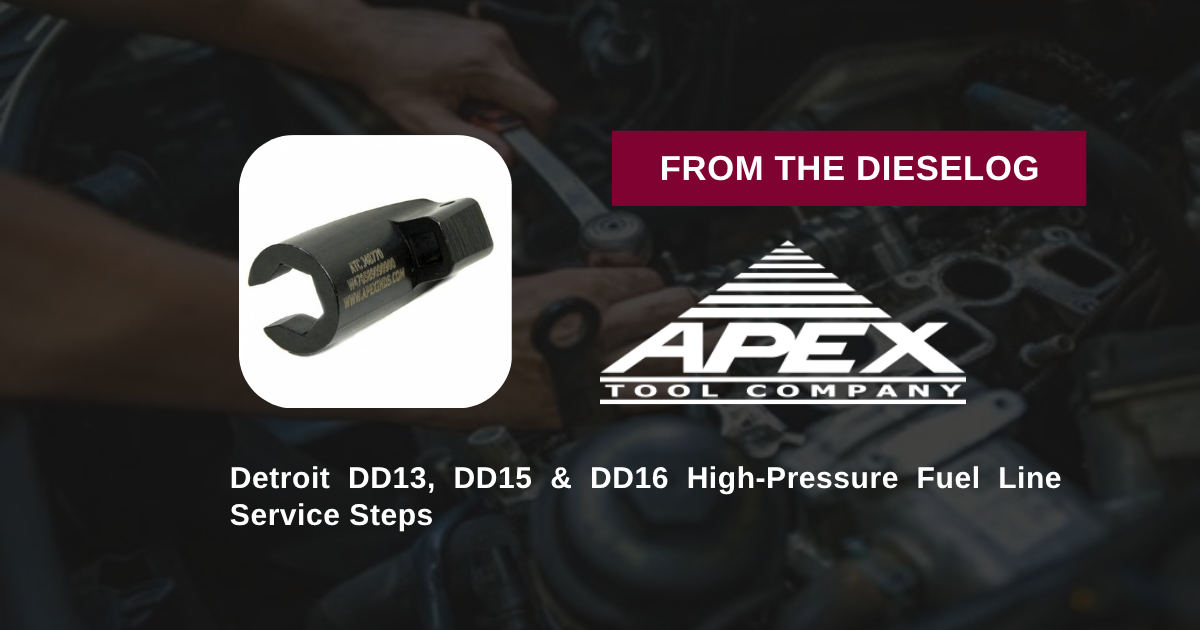
Servicing fuel injectors, replacing a fuel rail, or performing high-pressure fuel system maintenance on a Detroit Diesel DD13, DD15, or DD16 engine? Follow this step-by-step professional workshop procedure to inspect steel line flares, align the open-side ATC J48770 19mm socket, torque line nuts to OEM specification, and verify zero fuel leaks.

Why Open-End Wrenches & Improvised Crowsfeet Cause High-Pressure Fuel Leaks
On Detroit Diesel DD-Series engines, high-pressure common-rail fuel lines carry extreme fuel pressures between the rail and fuel injectors. Because these steel lines feature precision-machined sealing flares, achieving exact, uniform thread clamping torque is mandatory. Technicians who attempt to service these 19mm line nuts using open-end wrenches or offset crowsfeet encounter major mechanical failures. Open-end wrenches slip under high torque, stripping the 19mm nut hex corners and binding against adjacent lines. Crowsfeet applied at improper angles apply severe lateral side-loading to the steel line, twisting the rigid tubing and cracking the flare cone. A cracked flare or under-torqued nut allows high-pressure diesel fuel to spray underneath the valve cover, diluting engine oil, causing engine misfires, and creating severe fire hazards. Utilizing the 1.00-pound ATC J48770 19MM Fuel Line Socket eliminates these service failures completely. Designed specifically with a slotted open side, the socket slides directly over the rigid line, dropping flush over the 19mm nut. Attaching a 3/8" drive torque wrench to the socket allows technicians to apply smooth, centered rotational torque straight to the fitting without twisting the line or binding against surrounding components.
The 5-Step Detroit DD-Series Fuel Line Service Protocol
- Depressurize Fuel System & Remove Valve Cover: Ensure the engine is completely shut down and fuel pressure has bled down per Detroit Diesel safety instructions. Remove the valve cover to access internal fuel lines and injectors.
- Inspect Steel Fuel Lines & 19mm Flare Nuts: Inspect high-pressure line threads and sealing flares for cracks, burrs, or corrosion. *Verify line nuts and sealing surfaces are 100% clean.*
- Slide ATC J48770 Socket Over Steel Line & Seat Nut: Align the open slot of the ATC J48770 19mm socket with the rigid fuel line. Slide the socket down over the line until it seats 100% flush over the 19mm hex nut.
- Attach 3/8" Drive Torque Wrench & Apply Factory Torque: Snap a calibrated 3/8" drive torque wrench into the socket drive tang. Torque the 19mm nut in a continuous, smooth pull to Detroit Diesel OEM specification (refer to manual for exact torque spec and angle).
- Inspect Clearance & Perform System Pressure Test: Remove the ATC J48770 socket. Reinstall valve cover and prime the fuel system. Run the engine and perform a high-pressure fuel system leak check using diagnostic software to confirm zero fuel pressure drop or leaks.
PRO-TECH CALIBRATED TORQUE WRENCH & LINE CLEANLINESS MANDATE:
ALWAYS USE A CALIBRATED 3/8" DRIVE TORQUE WRENCH when securing high-pressure fuel lines! Under-torquing or over-torquing fuel line nuts causes severe high-pressure leaks or cracked fittings! ALWAYS verify steel lines are clean before slipping the ATC J48770 socket into place!
1.00 lb Precision Slotted 19MM High-Pressure Line Socket. Protect Detroit DD Overhauls.
Get the ATC J48770 Socket Now
overall rating:
my rating:
log in to rate