
Blog
Tech Guide: Detroit Series 60 Counterbore Machining
Precision deck machining guidelines for heavy truck engine line mechanics.

Chasing repeating head gasket leaks on a 12.7L or 14L Detroit? Learn the professional mechanical workflow for re-facing counterbores and installing shims using the ATC30147 suite.
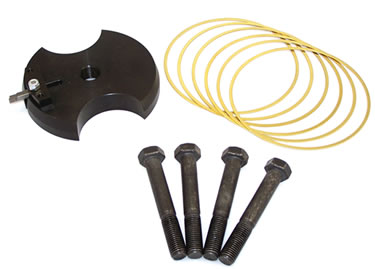
Why Protrusion Consistency Rules the Top End
Measuring liner protrusion on a Detroit Diesel Series 60 engine is a high-accuracy step. If the counterbore ledge is pitted or structurally uneven, the liner flange will sit tilted inside the bore. When the cylinder head is torqued down, this uneven base induces an intense bending stress on the liner flange, causing it to crack off or migrate fluid into the oil pan. Furthermore, all six liners must sit within a tight relative height spec to achieve uniform head gasket crush. If any ledge is low, you must machine it down deeply and cleanly using the ATC30147 cutter, then introduce a stainless steel shim to lift the landing height back into pristine factory orientation.
The 5-Step In-Frame Machining Protocol
- Perform Protrusion Mapping: Pull the old liners. Clean the block deck and counterbore ledges obsessively with a wire wheel to remove carbon sludge. Drop in your new liners dry, torque them down with hold-down tools, and map the protrusion profile using a dial indicator. Identify all low or uneven ledges.
- Configure the ATC30147 Cutter Set: Bolt the ATC30144 precision shim cutting plate directly onto your Porta-Tool or Kent-Moore master drive housing assembly. Install a fresh, sharp carbide cutter bit from the kit into the tool holder, checking that the cutting clearance matches the Series 60 bore radius perfectly.
- Execute Controlled Machining Passes: Seat the cutter fixture firmly onto the block deck and bolt it down to eliminate any chatter. Feed the cutting head down slowly by hand until it makes light contact with the ledge. Turn the drive handle at a slow, continuous rhythm, stepping down the depth incrementally until the eroded pit marks vanish and a flat, bright machined ledge is achieved.
- Clean and Measure Final Depth: Vacuum all metal chips completely out of the cylinder bore. Clean the machined ledge with solvent. Use a depth micrometer to measure the exact distance from the block deck to the new ledge to determine the required thickness of your repair shim.
- Install Shims & Re-Check: Coat the bottom of the provided .030" liner shims lightly with a recommended block sealant compound if required by your shop protocol. Slide the shim flat onto the newly cut counterbore. Re-insert the cylinder liner and run a final dial indicator sweep to guarantee that the protrusion sits perfectly within OEM specifications.
CRITICAL BENCH METRIC:
Never rush your cutting passes or turn the tool too fast! Forcing a carbide bit to take too deep of a cut into a cast iron block deck will cause the bit to chatter, leaving an irregular, scalloped finish on the counterbore ledge. A rough finish will cause the shim to distort under combustion load later, leading to fast liner settling and total gasket failure. Slow, uniform feeding produces a mirror finish.
American Machining Precision. Eradicate Comebacks Permanently.
Order the ATC30147 Counterbore Kit
overall rating:
my rating:
log in to rate