
How to Diagnose Diesel Engine Problems: A Step-by-Step Guide
A diesel engine owner calls with a complaint: low power, poor cold starts, rough idle, or a check engine light. Your job is to determine what's wrong and quote accurate repair costs. But diesel engines are complex machines where a single symptom can have multiple causes—and wrong diagnosis costs you money in comebacks and customer goodwill.
Professional diagnosis isn't guesswork. It's a systematic process of eliminating possibilities until you identify the actual problem. This guide walks through the proven diagnostic methodology that diesel professionals use to solve problems efficiently and accurately. We've supported diesel shops since 1972, and we've learned that proper methodology separates profitable shops from those losing money on misdiagnoses.
Step 1: Comprehensive Complaint Documentation
Before touching a tool, interview the customer thoroughly. Document exactly what they're experiencing, when it happens, and what they've already tried. Is the issue intermittent or constant? Does it occur cold-start only or all the time? Is it worse under load or at steady highway speeds? Does it correlate with weather, recent maintenance, or specific driving conditions?
A customer saying "the engine's running rough" could indicate anything from fuel contamination to turbo issues to emission system malfunction. But if they say "it runs rough specifically when cold, clears up within two minutes of driving, and started after they had fuel added at a truck stop," you're already narrowing possibilities to fuel quality or heating system issues.
Document fuel consumption changes, oil consumption patterns, starting behavior, and any recent repairs. Has this engine had recent work? Comebacks often trace to technician error rather than component failure. Knowing the repair history prevents chasing ghosts.
Step 2: Visual Inspection and Basic Checks
Before connecting diagnostic equipment, look at the engine. Check fluid levels—low coolant suggests leaks or overheating. Low oil indicates consumption or leaks. Examine engine oil color and smell—black tarry oil suggests overcooling or fuel dilution. Milky oil indicates coolant intrusion. These observations take 60 seconds and sometimes point directly at problems.
Check for obvious leaks around injectors, fuel lines, turbo seals, and coolant fittings. An engine weeping diesel indicates fuel system issues. Blue smoke at startup suggests oil burning—worn rings, valve seal leakage, or turbo issues. Black smoke under acceleration points toward fuel system problems, blocked air intake, or turbo malfunction.
Smell the exhaust. Diesel smoke has a characteristic odor, but sweet-smelling exhaust suggests coolant leakage into cylinders. Acrid chemical smell might indicate transmission fluid in the exhaust. Fuel odor indicates unburned fuel exiting the stack.
This sensory inspection takes minutes and often reveals patterns that point diagnostic direction. It's also cheap—you're not burning technician hours on equipment yet.
Step 3: Read Diagnostic Trouble Codes
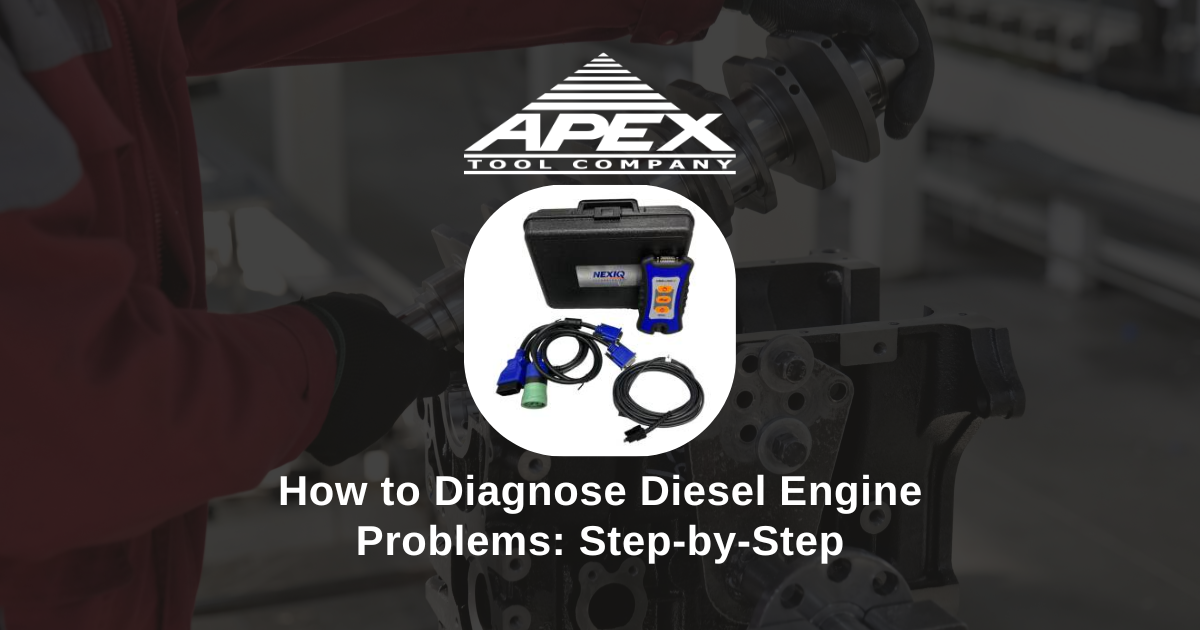
Connect a NEXIQ USB-Link diagnostic interface to the engine's communication port (located on the driver's side dash in most trucks, accessible under the hood in many Cummins engines). Power on your laptop and open the diagnostic software. Read all stored codes and pending codes. Don't clear codes yet—stored codes tell you what happened even if the fault resolved.
Document the exact code description from the engine's computer. "Code P1234" might mean nothing to you, but the diagnostic software translates it into manufacturer language: "Fuel Injection Control Module Supply Voltage Low." That specific information directs you toward wiring issues, battery issues, or power distribution problems—not fuel system or injection problems.
Scan for multiple codes. An engine throwing six codes simultaneously has a different problem than one throwing a single code. Multiple codes often point to a root cause (like low battery voltage affecting multiple systems) rather than multiple independent failures.
Note how long codes have been stored. Recent codes suggest new problems. Old codes that haven't reset indicate intermittent faults or issues the customer has been managing without telling you.
Step 4: Perform Physical Diagnostics
Now engage hands-on testing. For starting issues, perform a diesel compression test using a quality compression tester appropriate to your engine. Connect to each cylinder sequentially and record pressures. Diesel compression should be 400–600 psi depending on engine type, with no cylinder reading more than 50 psi lower than others.
Low compression in multiple cylinders suggests piston ring wear. Low compression in one or two cylinders indicates stuck valves, head gasket issues, or local piston/ring problems. Extremely high compression (beyond 650 psi) suggests carbon buildup or excessive compression ratio—unusual but possible on heavily tuned engines.
For suspected fuel system problems, perform fuel pressure tests at multiple points: low-pressure side (before the fuel filter), high-pressure side (after the lift pump), at the injection pump inlet (if applicable), and on common-rail systems at the rail itself. Different pressure specifications apply to different systems, but deviation from spec points directly at the fault.
For charging system issues, test battery voltage at rest (should be 12.8–13.2V), at idle (13.5–14.5V with alternator running), and under load. A battery that doesn't reach 13.5V with the alternator running indicates charging system failure—specifically alternator output or voltage regulator malfunction.
Step 5: Monitor Live Engine Data
This is where your NEXIQ interface earns its cost. With the engine running, monitor live sensor data. Watch fuel pressure stability, boost pressure response, coolant temperature progression, and battery voltage under load. Many diesel problems reveal themselves instantly when you watch actual data.
An engine claiming "low power" might show fuel pressure dropping under acceleration—indicating a fuel filter problem or injection pump malfunction. You see the problem in real time rather than guessing. An engine with intermittent stalling might show momentary voltage sags corresponding to stall events, pointing toward electrical connections, battery terminals, or charging system issues.
Watch for data inconsistencies. If the oxygen sensor reports a different fuel trim than the fuel injector pulse width and fuel pressure suggest, you've found diagnostic gold—the engine's computer is struggling to manage fuel delivery, revealing either sensor failures or actual fuel system problems.
Perform dynamic testing: accelerate from idle while watching boost pressure response, fuel pressure stability, coolant temperature stability, and sensor voltage changes. A healthy engine's sensors respond smoothly and predictably. Erratic sensor behavior during acceleration often points toward specific failing components.
Step 6: Component Testing and Isolation
Narrow down the failing component by testing specific systems. For turbo concerns, boost pressure response should be immediate and stable. Slow boost buildup suggests turbo waste gate stuck open or turbo wear. Erratic boost suggests turbo internal damage or intake air leak.
For injection system problems, use your diagnostic interface to command fuel injectors individually (if the engine supports this function). A cylinder that doesn't respond to injector commands suggests a dead injector. A cylinder responding to commands but running rough suggests a bad injector or local mechanical issue.
For cooling system diagnosis, watch coolant temperature progression from cold start to operating temperature. An engine taking 30+ minutes to warm up suggests thermostat stuck open. An engine overheating quickly suggests thermostat stuck closed, low coolant, or water pump failure. Erratic temperature readings suggest temperature sensor failure or head gasket issues causing combustion gas intrusion into coolant galleries.
Test individual components when possible. Use a multimeter to verify fuel solenoid resistance (should be within OEM specs, typically 5–15 ohms depending on component). Test glow plugs on cold engines (they should show 2–4 ohms each for resistance heating). These simple electrical tests quickly identify which components are dead versus functional.
Step 7: Correlation and Root Cause Identification
Combine all your information: customer complaint, codes, physical tests, live data, and component testing. Look for patterns. Does the data tell a consistent story?
Example: Customer reports rough idle. Diagnostics show code P0087 (Fuel Pressure Too Low). Compression test is normal. Fuel pressure tests show fuel pressure is 5 psi below spec at idle, dropping under acceleration. Fuel filter visual inspection shows dark, contaminated appearance. Root cause: fuel contamination reducing injection pump pressure, traced to a degraded fuel filter that needs replacement and possible system flushing.
Example 2: Customer reports intermittent stalling. Codes show multiple past codes related to alternator output, now cleared. Live data shows battery voltage at 12.2V while running (should be 13.5–14.5V). Alternator electrical test shows output is 30 amps instead of expected 100+ amps. Root cause: alternator bearing failure reducing stator rotation, leading to insufficient charging. Bad alternator, not a dozen possible electrical gremlins.
The goal is identifying the actual cause, not just the most visible symptom. Confirming root cause prevents selling customers unnecessary parts and building your reputation as a diagnostician rather than a parts-changer.
Step 8: Verification and Solution Testing
Before quoting the repair, verify your diagnosis with targeted testing. If you suspect fuel contamination, extract fuel from the tank and run it through a clear container. Visible contamination confirms the diagnosis. If you suspect alternator failure, perform a load test that quantifies output insufficiency.
For complex repairs, consider performing diagnostic testing after the repair to confirm the fault is resolved. An engine that stalled due to low battery voltage should hold 13.5V+ after alternator replacement. An engine with low power due to fuel contamination should regain boost response after fuel system flushing.
This verification step is particularly important for comeback prevention. Testing after repair confirms the problem is actually solved, not masked by secondary issues or incomplete diagnosis.
Common Diesel Diagnostic Pitfalls to Avoid
Over-Reading Diagnostic Codes
Codes describe symptoms, not always root causes. Code "P0234 Turbo Overboost Condition" might result from a boost pressure sensor failure reading false high pressure, a waste gate stuck closed, a leak in the intake manifold causing pressure spikes, or actual turbo failure. The code doesn't tell you which—diagnostics do.
Assuming One Problem
Engines can have multiple issues simultaneously. An engine that's hard to start, runs rough, and lacks power might have issues with glow plugs (hard start), fuel quality (rough), and turbo (power loss). Diagnosing and solving one problem while missing others guarantees comebacks.
Skipping the Visual Inspection
Diesel problems are often simple and visible: leaking fuel lines, failed belts, split hoses, corroded battery terminals. Spending 30 seconds looking before plugging in diagnostics sometimes reveals the entire problem. It's the cheapest diagnostic step available.
Not Documenting Findings
Write down compression readings, fuel pressures, code descriptions, and sensor values. Documentation prevents misremembering during customer conversations, supports warranty claims, and builds diagnostic continuity if the vehicle returns later with related issues.
FAQ: Diesel Engine Diagnosis
How long should a diesel engine diagnosis typically take?
Basic diagnostics (codes + compression + fuel pressure) typically require 1–2 hours. Complex intermittent issues might require several hours of driving and monitoring to reveal patterns. Budget time proportional to problem complexity. A customer paying for thorough diagnosis costs less than paying for misdiagnosis comebacks.
What diagnostic codes should I ignore or consider low-priority?
Codes related to emission system parameters on older engines that have seen significant mileage often don't require immediate action if the engine runs well. Codes that set once but don't repeat might represent momentary sensor blips rather than actual failures. However, never ignore active codes or codes that repeat—these indicate real problems.
How do I know if a diesel problem is electrical, fuel system, or mechanical?
Electrical: Affects starting, charging, glow plug function. Shows as cranking issues, dim lights, or starting problems.
Fuel system: Affects running quality, power, and idle smoothness. Shows as hard starting, rough running, or lack of power.
Mechanical: Affects compression, durability, and longevity. Shows as low compression, blue smoke, or excessive oil consumption.
Diagnostics reveal which system is failing by isolating where the problem exists in the engine management sequence.
Can I diagnose diesel problems without a NEXIQ interface?
Partially. You can perform compression tests, fuel pressure tests, and visual inspections without electronic diagnostics. However, you'll miss sensor values, active codes, and the ability to command components for testing. Modern diesel diagnostics demand electronic equipment—attempting to diagnose without it leaves you guessing on 40–50% of problems.
What should I do if my diagnosis doesn't match the customer's complaint?
Take the discrepancy seriously. Either the engine condition has changed between customer complaint and your diagnostics, you've misunderstood what the customer is experiencing, or your diagnostics have revealed a different problem than the customer realized. Discuss findings with the customer, road-test if possible, and verify your diagnosis matches their actual experience.
Master Diesel Diagnostics for Profitable Repairs
Proper diesel engine diagnosis is a skill that separates professional shops from parts-changers. It requires knowledge, tools, methodology, and patience—but it pays dividends through accurate repairs, satisfied customers, and long-term shop profitability.
Apex Tool Company provides all the diagnostic equipment you need: NEXIQ USB-Link interfaces that connect to your engine, Pro-Link cartridges for manufacturer-specific diagnostics, and specialized testing tools. We've supported diesel professionals since 1972 because we understand that your diagnostic capability directly impacts your success. Explore our complete diagnostic equipment selection and build the foundation for professional diesel troubleshooting. Our team is ready to help you select the right tools for your operation and answer technical questions as you develop your diagnostic methodology.