
Blog
Nexiq Products: Unlock Efficiency with Top Diagnostic Tools
Discover the critical role of Nexiq products in diagnosing truck issues efficiently.
Exploring the Benefits of Nexiq Products
You’ve probably seen the 'check engine' light pop up on your car's dashboard. It’s an inconvenience. Now, imagine that same light flashing in the cockpit of a 40-ton semi-truck carrying time-sensitive cargo across the country. The stakes are much higher, and the solution isn't at your local auto parts store.
The reason for this complexity is simple: a modern truck is not just an engine on wheels. It’s a rolling network of more than a dozen specialized computers, or ECUs, that manage everything from braking and emissions to fuel efficiency. These systems are far more sophisticated than those in the average passenger vehicle.
When one of these commercial vehicles goes down, the clock starts ticking. According to industry data, every hour of unplanned downtime can cost a fleet hundreds of dollars in lost revenue and delayed deliveries, disrupting the supply chain we all depend on. Fixing the problem quickly is not a luxury; it’s an economic necessity.
So, how do mechanics diagnose and solve these complex electronic puzzles? They need a special kind of heavy duty truck diagnostic scanner to act as a translator between their laptop and the truck's computers. This guide explores the benefits of Nexiq products and answers a fundamental question: what is a NEXIQ, and how does it keep our economy moving?

What Does It Mean to 'Talk' to a Truck’s Brain?
Beneath the metal and moving parts, a modern truck is run by a network of small, powerful computers. These are called Electronic Control Units, or ECUs. Think of an ECU as the dedicated "brain" for a specific job. For example, the engine has its own ECU managing everything from fuel injection to performance, ensuring it runs efficiently and reliably.
The complexity doesn't stop with one brain. A single semi-truck can have over a dozen different ECUs, each one a specialist. There’s a brain for the brakes, another for the transmission, and yet another for the cabin's climate control. To make matters more complicated, these components, like a Cummins engine, often come from different manufacturers, each with its own unique digital dialect.
This network of specialized brains creates a challenge: they don't speak the same language as a mechanic's laptop. You can't just plug a regular USB cable into a truck and expect to understand the complex systems inside. To diagnose a problem, a mechanic needs a special translator—a device that can listen to all these different electronic conversations and convert them into something a computer can display.
The Nexiq USB-Link: Your Truck-to-Laptop Universal Translator
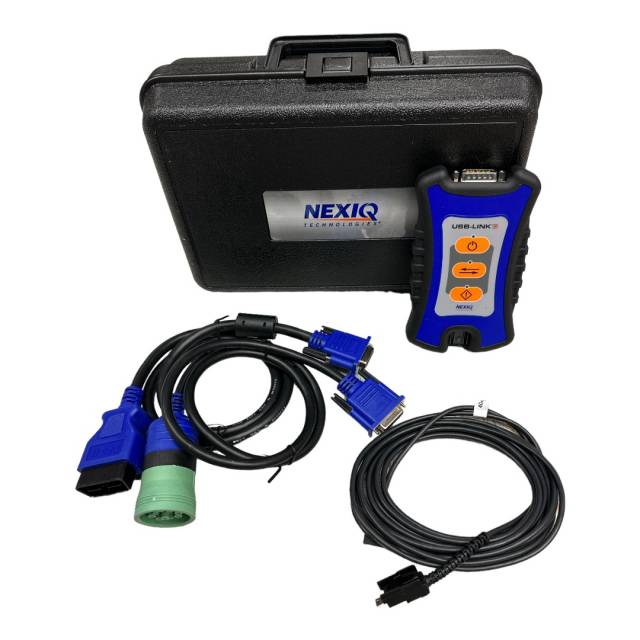
This is where the Nexiq USB-Link comes in. It’s the physical device that acts as that special translator we talked about. If you look at a genuine Nexiq adapter, you’ll see it’s a rugged little box with two different cables. One cable has a round, multi-pin connector designed to fit perfectly into the standard diagnostic port found on virtually every heavy-duty truck. The other end has a familiar USB plug that connects directly to a mechanic's laptop.
Using it is straightforward. A mechanic plugs the adapter into the truck, connects the USB to their computer, and instantly creates a bridge between two very different worlds. This physical link is the crucial first step, allowing the complex electronic signals from the truck’s various ECUs to flow to a place where they can be understood. It’s the handshake that starts the entire diagnostic conversation.
Once connected, the adapter gets to work. It listens to all the specialized data "languages" being spoken by the engine, brakes, and transmission. It then translates this information in real-time into a standardized format that computer software can read. Without this translation, the data from the truck would just be electronic noise to the laptop. The adapter turns that noise into organized, usable information, making it an essential part of any modern NEXIQ diagnostic tool kit.
However, the adapter itself doesn't have a screen or buttons to show you what's wrong. It’s a brilliant but silent interpreter. To actually see the error codes, view live engine data, or run tests, the adapter needs to pass its translated information to a diagnostic program running on the laptop. This distinction is key: the hardware creates the connection, but it’s the software that tells the story.
Why the Adapter Is Only Half the Story: Hardware vs. Software
That physical connection made by the Nexiq adapter is essential, but it only solves half the problem. While the adapter expertly translates the truck’s electronic signals, it doesn't have a screen or interface to show the mechanic what those signals mean. To see the actual diagnostic trouble codes or view live data from the engine, that translated information needs to be fed into a specific software program running on the laptop. This is the crucial relationship in modern vehicle diagnostics: the hardware (the adapter) creates the communication bridge, but the software (the program) provides the user-friendly window to see across it.
The easiest way to understand this is to think of the Nexiq adapter like a powerful new smartphone. The phone itself is impressive hardware, but it’s the apps you install that make it truly useful. You need a banking app to check your balance and a weather app to see the forecast. Similarly, a mechanic needs specific diagnostic “apps” for the different components in a truck. A complete NEXIQ diagnostic kit isn’t just the adapter; it’s the combination of that hardware with the software needed to talk to specific brands of engines, transmissions, or braking systems.
While many truck manufacturers require their own proprietary software, Nexiq also offers its own powerful, multi-brand program called NEXIQ eTechnician™. But whether using the manufacturer's program or a versatile tool like eTechnician, the principle is the same. Here are a few examples of the specific software “apps” the Nexiq adapter enables a laptop to run:
- Cummins Engines → INSITE™
- Detroit Diesel Engines → Detroit Diesel Diagnostic Link™ (DDDL)
- Allison Transmissions → Allison DOC®
- Bendix Brakes → ACom® PRO
With the right hardware and software finally working together, a mechanic has everything they need to accurately diagnose a problem.
How a Small Blue Box Prevents Big Delays on the Road
Imagine a delivery truck stranded on the highway with a flashing warning light. Every minute it sits idle, it’s not earning money—a costly problem for any business known as "vehicle downtime." In the past, a mechanic might spend hours manually inspecting parts, turning a simple fix into an expensive, day-long ordeal. This expensive guesswork is exactly why businesses must ask: is a NEXIQ scanner worth it?
With a Nexiq adapter, that entire process changes. The mechanic connects the laptop, and the software immediately pinpoints the problem—say, a single faulty sensor. What could have been hours of guesswork becomes a five-minute diagnosis. This ability to instantly find the issue is the hallmark of the best heavy duty truck diagnostic scanner, turning a costly delay into a quick, targeted repair.
This efficiency is critical for any company, making NEXIQ for fleet maintenance an essential investment. By getting trucks back on the road faster, businesses stay profitable and supply chains remain reliable. Given how important this speed is, the diagnostic technology itself is always improving. But as new versions are released, does a shop always need the latest model to stay competitive?
Is Newer Better? A Simple Look at Nexiq USB-Link 2 vs. 3
Thinking about the NEXIQ USB-Link 2 vs USB-Link 3 is a bit like choosing an internet plan. The USB-Link 2 is like reliable, high-speed broadband—it gets the job done well and has been the trusted industry standard for years. The newer USB-Link 3, however, is like upgrading to fiber-optic. It’s dramatically faster and built to handle a much heavier flow of information at once, making it a tool designed for the future.
This extra speed isn't just for show. As trucks become more advanced—with complex emissions systems and smarter electronics—they generate a massive amount of diagnostic data. The USB-Link 3 processes this data torrent without slowing down, ensuring mechanics get an accurate picture on the newest vehicles. One of the core genuine NEXIQ adapter benefits is this forward-thinking design, ensuring that as vehicles evolve, the tool can keep up. This includes straightforward processes for how to update NEXIQ drivers, keeping the device ready for tomorrow’s technology.
So, which is the right choice? For a shop working on the vast majority of trucks on the road today, the proven USB-Link 2 remains a fantastic workhorse. But for businesses investing in the future and servicing brand-new models, the USB-Link 3 is the clear choice for maximum speed and longevity. While choosing between these two genuine tools is a strategic decision, some cheap online deals raise an even more critical question of authenticity.
The Hidden Dangers of a “Too Good to Be True” Deal: Clones vs. Genuine Nexiqs
When searching online, you’ll likely stumble upon NEXIQ diagnostic tool alternatives that look like the real thing but sell for a fraction of the price. It’s a tempting offer, but these knock-offs, known as “clones,” are a massive gamble. While they may mimic the appearance of a genuine device, they are built with cheap, reverse-engineered, and unreliable internal components.
The most immediate danger is that the clone gives the mechanic bad information. Think of it as a translator that speaks the language poorly. It might “mistranslate” the truck’s data, pointing to a problem that doesn’t actually exist. This can lead a technician to waste hours of labor and replace an expensive, perfectly good part, turning a simple fix into a costly mistake.
An even more frightening risk is permanent vehicle damage. A genuine Nexiq is carefully engineered to communicate safely with a truck’s sensitive computers. A poorly made clone can send improper electrical signals back into the vehicle, potentially “bricking” one of the truck’s expensive electronic brains. It’s like plugging a sketchy, no-name charger into a new smartphone—it might work, or it might fry the system entirely, causing troubleshooting NEXIQ connection problems that are just the tip of the iceberg.
Ultimately, the most important of all genuine NEXIQ adapter benefits is peace of mind. With an authentic tool, a mechanic knows the information is accurate, the connection is stable, and the customer's multi-thousand-dollar vehicle is safe. Choosing genuine isn’t about paying for a brand name; it’s an investment in reliability to prevent a far more expensive disaster. This trustworthy connection forms the foundation of the entire repair process, from a single flashing light to a fixed truck.
From a Flashing Light to a Fixed Truck: The Complete Picture
Before, a stalled semi-truck on the side of the road might have been a simple mystery. Now, you can see past the metal and visualize the invisible conversation that needs to happen. You understand that a truck’s check-engine light is the start of a digital dialogue, one that requires a special kind of translator to bridge the gap between the vehicle’s complex brain and the mechanic’s computer. This is the core of modern heavy duty truck diagnostics.
From a blinking warning light to a clear solution, the path is no longer a black box. You now know how a mechanic uses essential fleet maintenance tools to get answers. They connect a device—the "universal translator" like those made by NEXIQ products—which allows their laptop software to understand exactly what the truck’s computers are saying. This process transforms confusing error codes into a precise action plan, saving time and getting the truck moving again.
The next time you see a delivery truck on the highway, you’ll recognize the hidden technology at work—a layer of technical sophistication that was once invisible, working to keep our economy rolling and get your packages delivered on time.
overall rating:
my rating:
log in to rate