
Blog
Why the M10050 is Critical for CAT 3406 / 3408 / C15 Rebuilds
Why precision seal installation is the cheapest insurance on a CAT rebuild.

A single mis-seated crankshaft seal on a CAT 3406, 3408, or C15 can wipe out a rebuild, contaminate the bearing journals, and pull the engine right back into your bay. The M10050 is the heavy-duty installer designed to make sure that never happens.
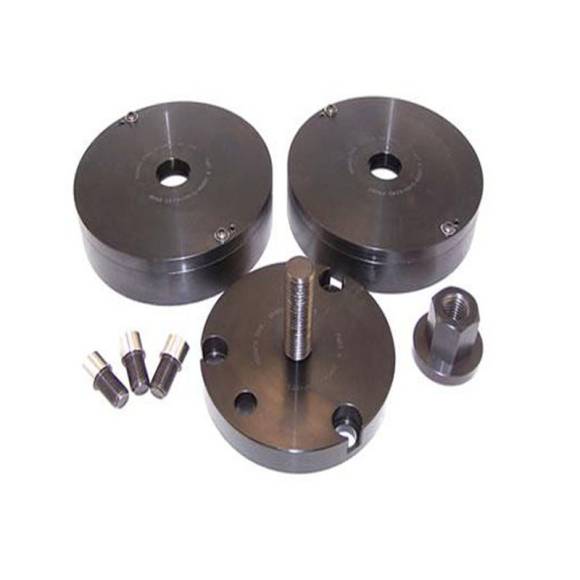
The Hidden Cost of a Failed Crankshaft Seal
When a crankshaft seal lets go on a CAT 3406, 3408, or C15, the damage rarely stays small. Oil migrates onto the flywheel and clutch, contaminates the rear main bearing, drips onto exhaust components, and creates a slow-bleed loss that drains the sump while the operator is still rolling miles. Most fleets discover the problem only after a low-oil alarm, a clutch slip, or a return visit from a customer who just paid for a full rebuild. By that point, you are not repairing a seal — you are repairing the consequences of a seal: bearing journals scored, clutch saturated, rear housing pulled, transmission dropped, and labor doubled. The root cause? Almost always installation, not the seal itself.
- Front and rear coverage in one tool kit: the M10050 installs both crankshaft seals and their matching wear sleeves on CAT 3406, 3408, and C15 engines — no swapping between half-finished setups mid-rebuild.
- Replaces a stack of legacy OEM numbers: consolidates 6V-6142, 6V-6143, 5P-1733, 5P-1737, and 9S-8858 into one rugged installer set, simplifying shop inventory and parts tracking.
- Precision-machined alignment: the tool centers the seal and wear sleeve on the crank snout or rear hub before drive-in, eliminating cocked installs and lip damage on the spring.
- Built for heavy-duty shop punishment: hardened materials and machined contact surfaces survive repeat use across rebuilds, fleet maintenance windows, and remanufacturing cycles.
- Engineered for repeatable results: controlled drive depth and squared contact prevent the most common cause of comeback rebuilds — a leaking crankshaft seal installed by hand or with a flat block of wood.
Why the M10050 is the Definitive Solution
The M10050 Front & Rear Crankshaft Seal & Wear Sleeve Installer exists because field-improvised installations have a well-documented failure rate. PVC pipe, brass drifts, sockets balanced on the seal lip — every shop has tried them, and every shop has eaten the comeback. The M10050 replaces all of that with a purpose-built drive plate, sleeve pilot, and contact ring sized exactly to the CAT 3406, 3408, and C15 crank dimensions. It places the wear sleeve squarely on the journal, then drives the seal to its correct depth without distorting the case bore or rolling the lip. The result is what every rebuilder is paying labor for: a dry rear main, a clean front cover, and an engine that goes back into service without a callback.
Anatomy of a CAT Crankshaft Seal Failure
Crankshaft seals on CAT 3406, 3408, and C15 engines fail in one of four predictable patterns, and each pattern traces back to installation discipline rather than the seal material itself. The first pattern is lip inversion: the spring-loaded seal lip rolls backward during press-in because the installer was not square to the bore. The seal looks fine externally but leaks the moment oil pressure rises against the inverted edge. The second pattern is cocked installation, where the seal sits at an angle in the bore. One side rides too deep, the other too shallow, and the lip contacts the journal at a tilt. The seal will hold static oil for hours, then weep under thermal cycling.
The third pattern is wear sleeve groove damage. CAT crank journals develop a measurable groove from decades of seal lip contact, and a fresh seal installed directly over that groove will leak from day one. The wear sleeve restores the surface, but only if it is installed concentric to the crank axis — exactly what the M10050 is engineered to guarantee. The fourth pattern is over-driven seal depth. A seal driven too deep into the front cover or rear housing can blind off the return drain, pressurize the seal cavity, and force oil past the lip under load. The M10050's controlled drive depth eliminates this entirely. Understanding the failure modes is the first step; using the correct tool to prevent them is the only step that actually matters.
Real-World Fleet Case Scenarios
Scenario 1 — The Comeback That Wasn't a Seal Problem. A regional freight fleet pulls a C15 for a routine in-frame overhaul. The shop replaces the rear main seal with a hand-driven socket because their installer set is "somewhere in the parts cage." Two weeks later the truck returns with oil on the bell housing. The shop drops the transmission, finds an inverted seal lip, replaces the seal, and eats six hours of labor plus a wash-down. Total avoidable cost: roughly $1,400. The M10050 would have cleared the entire ledger on its first install.
Scenario 2 — The Reman Shop That Tracks Comebacks. A diesel reman center rebuilding CAT 3406E blocks tracks every warranty return. After standardizing on dedicated seal and wear sleeve installers, their crank-seal-related comeback rate drops from 7 percent to under 1 percent over two quarters. At an average comeback cost of $1,800 per unit, the math on a $586.80 installer becomes self-evident before the first month of the next quarter.
Scenario 3 — The Owner-Operator Saving Tow Bills. A single-truck operator running a 3406B for vocational work invests in proper seal tooling for his off-frame rebuild. Two years and 240,000 miles later, the truck is still dry from the front cover to the flywheel housing. He has not paid for a tow, a clutch contamination clean-up, or a rear main R&R. The tool paid for itself the first time he didn't have to call a wrecker on a Sunday afternoon.
The True Cost of Failure vs. The Cost of the Tool
Heavy-duty shops live and die on labor recovery, and a leaking crankshaft seal is one of the most expensive labor recoveries in the diesel world. A rear main seal R&R on a CAT 3406 or C15 sitting in a chassis runs 10 to 14 hours of labor in a typical commercial shop. At $185 per hour, that is $1,850 to $2,590 in labor alone — before parts, before consumables, before the customer's downtime claim. Add the cost of a contaminated clutch ($800–$1,400), a flywheel resurface ($150–$300), and the rear seal kit itself, and the all-in cost of one failed install commonly clears $3,000.
The M10050 retails for $586.80. A single prevented comeback returns the tool's cost five times over. A second one returns it ten. Across a fleet shop doing six to twelve CAT rebuilds per year, the installer is not an expense — it is an insurance policy against the most preventable failure on the bench.
Where the M10050 Fits in Your Maintenance Schedule
The M10050 is not a tool that sees daily action on a shop floor — and that is exactly why it earns its place. It belongs in the rebuild bay, the overhaul cell, and the reman line. Pull it down whenever a CAT 3406, 3408, or C15 has the front cover or rear housing off the block: in-frame overhauls, out-of-frame rebuilds, crankshaft replacements, harmonic balancer service, flywheel housing R&R, and any time a wear sleeve needs to be installed to recover a grooved crank journal.
Smart shops standardize the procedure: every CAT crank that comes apart gets a new seal, a new wear sleeve where the journal shows wear, and a single trip through the M10050 before the engine goes back together. The labor cost of using the tool is essentially zero — the install takes minutes. The labor cost of not using it can take a full day to recover. That is the math every service manager needs to internalize before the next CAT block hits the stand.
Why Improvised Seal Installation Always Costs More
Every shop that does CAT rebuild work has, at some point, tried to install a crankshaft seal without the right installer. The improvisations are predictable: a length of PVC pipe cut to roughly the right diameter, a large socket balanced on the seal lip, a brass drift, a flat wooden block, or — most common of all — the old seal driven backward through the bore with a hammer. Each of these methods has a specific failure mode, and understanding them clarifies why the M10050 is not a luxury purchase but an essential one for any shop touching CAT 3406, 3408, or C15 engines.
PVC pipe is the most common improvisation because it appears to match the seal's outer diameter. The problem is that PVC compresses unevenly under hammer blows, focuses force at the point of impact rather than distributing it around the seal case, and produces cocked installs in roughly one out of every three attempts. Worse, PVC has no concentricity reference to the crank — it floats in the bore. The result is a seal that may look acceptable on visual inspection but rides at a measurable tilt, which becomes a slow weep within hours of startup under load.
Sockets contact the seal in two thin annular rings — the rim of the socket on one side and the drive face on the other. Neither distributes force across the seal case. Hammer strikes on a socket also have an unfortunate tendency to slip off-center, deflecting toward the seal lip and producing the classic inverted-lip failure within minutes of startup. Brass drifts have a similar problem with the additional risk of marking the seal case or transferring brass particles into the bore, where they will be carried into the oil galleries the moment the engine spins.
The old seal driven backward is the most dangerous improvisation because it actually works — sometimes. The old seal case has the correct outer diameter and provides a flat contact face. But it has no concentricity pilot, no controlled drive depth, and the technician driving it cannot see when the new seal has reached the correct seat depth. The leak that results is the slow-bleed variety: visible after a day or two of operation, just long enough for the engine to leave the shop before the comeback arrives on a flatbed.
The M10050 eliminates all of these failure modes by design. The pilot rides concentric to the crank axis. The drive face contacts the seal case across its full circumference. The depth stop seats the seal at the correct CAT-specified depth without operator judgment entering the equation. There is no improvisation that substitutes for engineered geometry — and there is no shortcut that pays off across more than two or three installs before the comeback math catches up and erases every dollar the shop thought it saved by not buying the tool.
Diagnosing a Crankshaft Seal Leak Before You Pull the Engine
One of the underappreciated benefits of standardizing on the M10050 is that it changes the diagnostic conversation on every CAT engine that comes through the door. When a 3406, 3408, or C15 arrives with an oil leak, the front main and rear main seals are usually high on the suspect list. With the M10050 in the tool crib, the diagnostic decision becomes straightforward: any seal that needs to be replaced can be replaced correctly, so the conversation is purely about location, not about whether the shop is equipped to do the job right the first time.
Front cover seal leaks typically present as oil on the harmonic balancer, the timing cover face, or the front of the oil pan. Rear main seal leaks present as oil on the bell housing, the flywheel, or the rear face of the block. A leak that is high and from the front cover joint may be a cover gasket rather than a seal — verify with a clean wipe-down and a short engine run before committing to a teardown. A leak at the rear that runs down the bell housing is almost always the rear main seal, especially if the clutch friction disc shows oil contamination or the pilot bearing area is wet.
Once the leak is confirmed as a crankshaft seal failure, the M10050 turns the repair from a multi-day question mark into a predictable bench operation. That predictability is itself a form of profitability — service writers can quote with confidence, technicians can complete the job in the booked time, and customers receive their equipment back without warranty drama. Diagnostic confidence flows downstream from tool confidence, and the M10050 is the tool that creates it on the CAT 3406, 3408, and C15 platform.
Frequently Asked Questions
Q: Does the M10050 cover both front and rear crankshaft seals on a CAT 3406?
Yes. The M10050 is a complete front-and-rear installer set for the crankshaft seals and matching wear sleeves on CAT 3406, 3408, and C15 engines. There is no need to buy two separate kits.
Q: What legacy CAT tool numbers does the M10050 replace?
The M10050 consolidates the functions of multiple legacy installers including 6V-6142, 6V-6143, 5P-1733, 5P-1737, and 9S-8858, giving you broad compatibility across CAT 3406, 3408, and C15 service intervals.
Q: Will it install the wear sleeve as well as the seal?
Yes. The kit installs both the wear sleeve onto the crank journal and the new seal into the front cover or rear housing, in the correct order and at the correct depth.
Q: Does the tool require special press equipment?
No. The M10050 is designed for shop-floor use with standard hand-driven installation — no hydraulic press required. The tool's geometry handles alignment; the technician handles the drive.
Q: Is this tool suitable for reman shops doing high volume?
Absolutely. The hardened, precision-machined components are built for repeated cycles in a heavy-duty production environment. This is not a one-time-use installer.
Q: Does it work on the C15 ACERT and BXS / SDP / MXS series?
The M10050 is engineered for the CAT 3406 / 3408 / C15 crankshaft seal geometry, which covers the common ACERT and pre-ACERT applications in the C15 family. Confirm your specific engine serial range against the application listing before ordering.
Q: What is the shipping weight and lead time?
The M10050 ships at 31 pounds and is currently in stock. Orders over $500 ship free in the continental U.S.
Q: How fast does the tool pay for itself?
A single prevented seal-related comeback on a CAT rebuild typically returns the M10050's purchase price three to five times over. Most shops recover the cost in the first rebuild cycle.
Stop the Comebacks. Install It Right the First Time.
The M10050 Front & Rear Crankshaft Seal & Wear Sleeve Installer — only $586.80 | In Stock | Free U.S. shipping over $500
SHOP THE M10050 NOWCall 812-579-5478 or 800-365-2233 | Mon–Fri 8 a.m.–5 p.m. ET
overall rating:
my rating:
log in to rate