
Blog
Compuchek Fuel Restriction & Vacuum Diagnostics
Precision fuel system diagnostic guidelines for commercial fleet and Class 8 mechanics.
Troubleshooting low power under load, hard starting, or fuel starvation on a heavy-duty commercial truck? Follow this step-by-step professional workshop procedure to snap on the ATCL-TU-32-21 restriction tester, evaluate suction vacuum, perform live road testing, and isolate clogged fuel lines or filters.
Why Inlet Vacuum Diagnostics Prevents Catastrophic Fuel System Wear
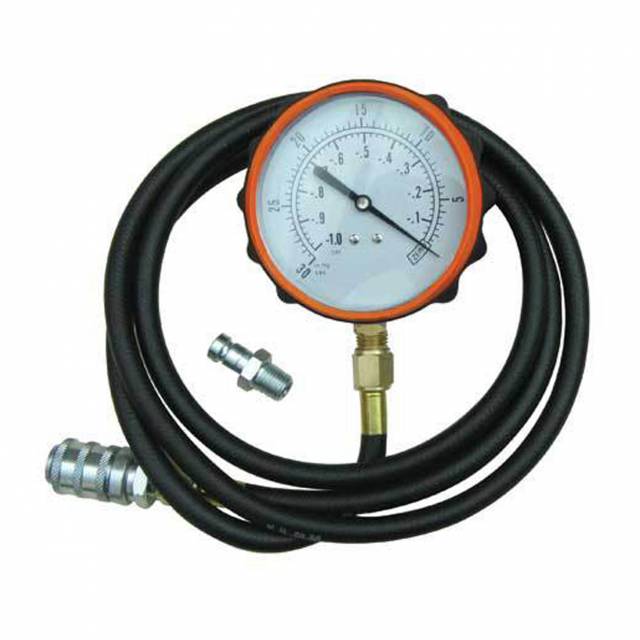
High-pressure common rail and unit-injector diesel fuel systems depend on a continuous, unrestricted supply of liquid fuel from the tank. Diesel fuel serves two vital functions: creating combustion power and lubricating the ultra-tight tolerances inside high-pressure pumps and fuel injectors. When inlet restriction develops—whether from a wax-plugged primary fuel filter, a kinked suction hose, or an obstructed fuel tank pickup screen—the transfer pump pulls against high resistance. This excessive vacuum causes fuel aeration and cavitation. Aerated fuel compresses during the injection stroke, dropping injection pressure, causing engine misfires under load, and severely scrubbing internal metal pump surfaces. Diagnosing inlet restriction statically in a shop stall often fails because low fuel demand at idle does not draw enough volume to show high vacuum. Utilizing the 2-pound ATCL-TU-32-21 tester solves this diagnostic dilemma. Its 6-foot extension hose allows the technician to connect the female Compuchek fitting to the inlet test port and safely route the 3-1/2" vacuum gauge inside the cab. By monitoring the 0–30 inHg dial during full-throttle acceleration, the mechanic instantly sees whether vacuum exceeds OEM service limits (typically 6–10 inHg depending on engine manufacturer), confirming restriction before expensive components are damaged.
The 5-Step Fuel Restriction Diagnostic Protocol
- Locate Compuchek Port & Inspect Fitting: Locate the factory Compuchek diagnostic port on the fuel system suction side (typically situated near the primary fuel filter housing or transfer pump inlet). Wipe the fitting clean of dirt and road grime.
- Snap-Connect ATCL-TU-32-21 Coupler: Push the female Compuchek fitting of the ATCL-TU-32-21 hose assembly firmly onto the male engine port until the sleeve locks with an audible click. Verify a tight, leak-free mechanical connection.
- Route Hose for Safe Monitoring: Route the 6-foot flexible hose away from hot exhaust manifolds, cooling fans, and moving belts. Pass the 3-1/2" dial gauge into the vehicle cab or secure it safely in the service stall.
- Record Idle & Full-Load Vacuum Readings: Start the engine and observe baseline vacuum at idle. Perform a full-throttle stall test or road test under heavy load while observing the dial indicator. *Typical OEM specs: Normal inlet vacuum under load is 3–5 inHg; readings exceeding 7–10 inHg indicate severe inlet restriction.*
- Isolate Restriction & Execute Repairs: If vacuum exceeds specification, move the test connection upstream (e.g., ahead of the fuel filter) to isolate whether the restriction is caused by a plugged filter element, a collapsed suction hose, or a clogged fuel tank pickup tube. Disconnect the tool, replace restricted components, and re-test to verify normal vacuum.
PRO-TECH COMPUCHEK COUPLER & VACUUM THRESHOLD MANDATE:
Always ensure the female Compuchek coupler sleeve snaps fully locked before starting tests! A partial connection allows atmospheric air to bleed into the fuel suction line, creating artificial aeration symptoms! Pair this vacuum tester with a positive pressure tester (such as the TU-32-20) for 100% total fuel system diagnostic coverage!
0–30 inHg Dial Metrology. Protect Commercial Diesel Engine Fuel Systems.
Get the ATCL-TU-32-21 Restriction Tester Now
overall rating:
my rating:
log in to rate