
Blog
Detroit 60 Series Counterbore Sleeve Machining Steps
Precision machine shop guidelines for commercial fleet and Class 8 engine remanufacturers.
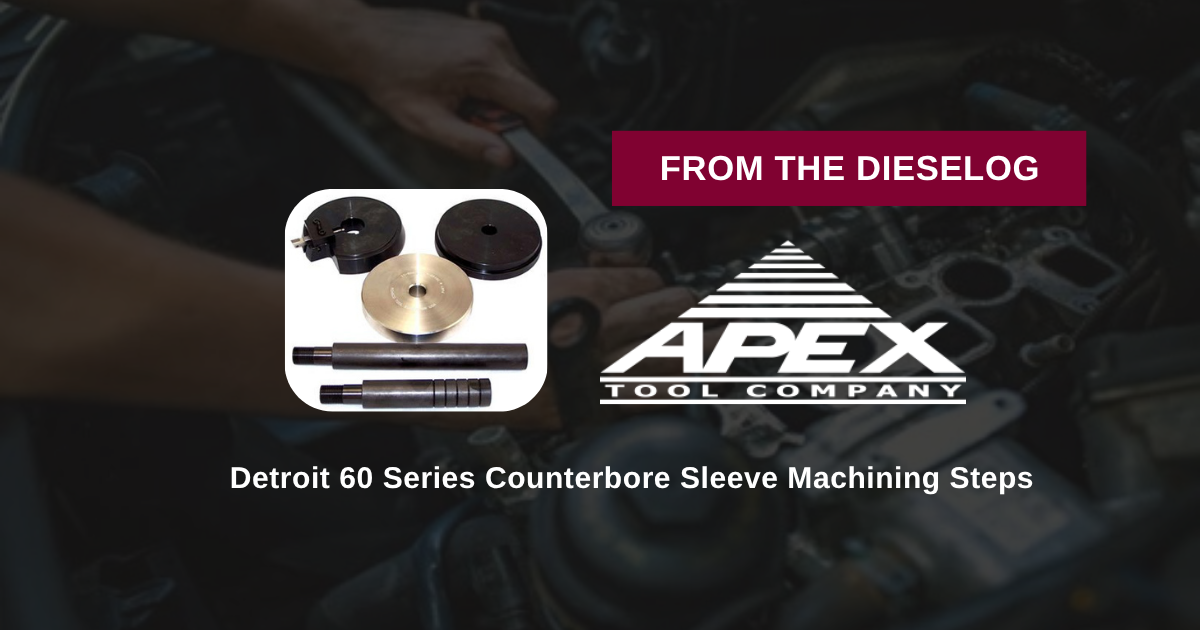
Restoring deeply damaged counterbores on a Detroit Diesel 60 Series 11.1L, 12.7L, or 14L engine block using the M30145 conversion kit? Follow this step-by-step professional workshop procedure to assemble the kit onto a PT-2050 base plate, machine oversized sleeve recesses, press repair bushings, and finish-cut to achieve exact factory liner protrusion.

Why Deep Counterbore Erosion Requires Repair Sleeve Machining
On Detroit Diesel 60 Series engines, wet cylinder liners sit directly upon counterbore ledges cast into the engine block. Over long haul service intervals, coolant seepage, electrolysis, and micro-fretting eat away the cast-iron ledge. When counterbore wear exceeds 0.020", stacking multiple thin metal shims is no longer viable. Thick shim stacks flex under cylinder head bolt clamp loads, causing liner movement, cracked liner flanges, and blown head gaskets. Repair sleeve installation is the industry-standard method for reclaiming these severely damaged blocks. Utilizing the 26-pound M30145 conversion kit attached to a PT-2050 base plate allows machinists to cut a wide, clean recess into the damaged deck area. By installing a solid repair sleeve and machining it down to match original OEM counterbore depth, the engine block is restored to full structural integrity, eliminating the need for expensive block replacement.
The 5-Step Detroit 60 Series Counterbore Sleeve Machining Protocol
- Clean Block Deck & Measure Baseline Damage: Remove old cylinder liners. Clean the engine block deck and damaged counterbores thoroughly. Measure counterbore depth around four points using a depth micrometer to calculate required sleeve machining dimensions.
- Assemble M30145 Conversion Kit to PT-2050 Base: Mount the M30145 cutter plate and drive arbor conversion assembly onto your PT-2050 / PT-2050-D / M52050 machine base plate. Lock the base plate flat onto the engine block deck over the target cylinder bore.
- Machine Oversized Recess for Repair Sleeve: Set the M30145 carbide cutter bit to the specified repair sleeve outside diameter. Advance the micrometer feed arbor taking light 0.002” passes until the damaged ledge is fully machined out to accept the repair sleeve.
- Press Repair Sleeve & Apply Retaining Compound: Clean all metal shavings from the machined recess. Apply a uniform coat of high-temperature anaerobic sleeve locking compound to the sleeve OD and block recess. Press the repair sleeve firmly into the counterbore until bottomed.
- Finish-Cut Sleeve to Factory Counterbore Depth: Re-adjust the M30145 cutter bit to the standard liner flange diameter. Take light finishing passes across the installed sleeve face to achieve exact Detroit Diesel OEM counterbore depth and liner protrusion. Vacuum metal shavings and verify depth using a dial gauge.
PRO-TECH ANAEROBIC COMPOUND & VACUUM MANDATE:
ALWAYS APPLY HIGH-TEMP ANAEROBIC RETAINING COMPOUND (such as Loctite 680) when pressing counterbore repair sleeves to prevent coolant or gas migration underneath the sleeve! ALWAYS VACUUM ALL CAST-IRON AND BRASS SHAVINGS out of cylinder bores and oil galleries before installing fresh liners!
26 lbs Precision Tooling Conversion Assembly. Protect Detroit 60 Series Overhauls.
Get the M30145 Conversion Kit Now
overall rating:
my rating:
log in to rate