
Blog
Detroit DD13, DD15 & DD16 Fuel Line Service Steps
Precision common-rail maintenance guidelines for commercial fleet and Class 8 mechanics.
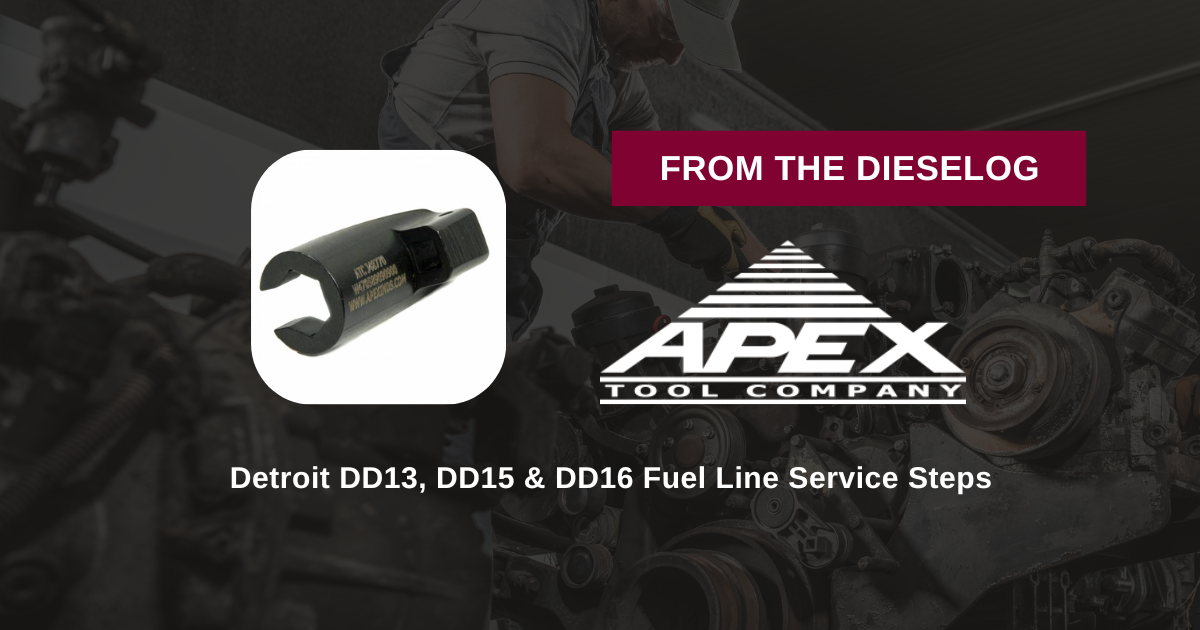
Replacing fuel injectors, leak-off lines, or high-pressure fuel rails on a Detroit DD13, DD15, or DD16 diesel engine? Follow this step-by-step professional workshop procedure to safely depressurize the common-rail system, position the ATC J48770 19MM socket, break line nuts loose cleanly, and torque lines to exact OEM specifications.

Why Improvised Open-End Wrenches Cause Common-Rail Leaks
The high-pressure fuel lines on Detroit DD-series engines link the high-pressure fuel pump, rail manifold, and fuel injectors under extreme hydraulic pressure. Because these line nuts must be torqued to exact factory specifications (typically 30–40 N·m / 22–30 lb-ft depending on line generation) to achieve a leak-free cone seal, using standard wrenches or universal crowfoot sockets introduces major repair defects. Open-end wrenches flex under load, rounding off 19 mm hex corners. Once a flare nut corner is rounded, removing or properly torquing the line becomes nearly impossible without replacing the line assembly. Furthermore, standard crowfoot sockets set at odd angles change the effective torque wrench length, resulting in under-torqued or over-torqued fittings. Under-torqued lines leak diesel into the oil pan or engine bay, while over-torqued lines crush the flare cone landing, causing permanent internal cracking. Utilizing a dedicated 3/8″ drive slotted socket like the 1-pound ATC J48770 allows technicians to slide directly down over the fuel line, seating 100% square onto the 19 mm hex nut. This permits direct connection of a torque wrench at a 90-degree angle, ensuring exact factory torque delivery.
The 5-Step High-Pressure Fuel Line Torque Protocol
- Safety & Fuel System Depressurization: Shut off ignition and lock out starting circuits. Wait at least 15 to 20 minutes for common-rail residual pressure to dissipate completely. Clean dirt, oil scale, and debris around all high-pressure line connections using brake cleaner and shop air.
- Slide ATC J48770 Socket Over Line: Align the slot on the ATC J48770 19MM socket with the rigid high-pressure steel fuel line. Pass the socket over the tube and slide it down onto the 19 mm flare nut until fully engaged over all hex flats.
- Execute Clean Breakout Removal: Attach a 3/8″ drive ratchet or breaker bar to the ATC J48770 socket. Apply steady, centered counter-clockwise force to loosen the flare nut cleanly without slipping or rounding hex corners. Disconnect line clamps and carefully remove the fuel line.
- Stage Line & Align Sealing Cones: During reassembly, inspect line flare ends for burrs or scratches. Position the new or inspected fuel line into the rail and injector ports. Thread flare nuts on by hand at least 2 to 3 full turns to ensure zero cross-threading.
- Torque Fittings to OEM Specifications: Attach a calibrated 3/8″ drive torque wrench to the ATC J48770 socket (oriented 90 degrees to the torque wrench handle to maintain true torque reading). Torque 19 mm flare nuts smoothly to OEM specification (refer to Detroit Diesel service manual for specific engine series spec). Install line vibration dampening clamps, prime the fuel system, run the engine, and check for leaks using a blacklight or dry shop rag.
PRO-TECH TORQUE WRENCH ORIENTATION MANDATE:
Always position the ATC J48770 socket at a 90-degree angle relative to the torque wrench handle when torquing fuel line nuts! Positioning the socket straight out in-line with the wrench alters the effective lever arm length, resulting in over-torqued fittings and crushed flare cones!
Precision Slotted Alloy Steel Socket. Protect Detroit DD-Series Common-Rail Systems.
Get the ATC J48770 19MM Socket Now
overall rating:
my rating:
log in to rate